How Do I Cut Corned Beef?
Corned beef is one of those meats that looks easy to cook but gets tricky the moment you pick up a knife. You pull it out of the pot, it smells amazing, and then you slice into it only to find tough, stringy pieces that are hard to chew. The good news is that cutting corned beef the right way is not hard at all once you know a few small tricks. In this guide, we will walk through everything step by step, using plain and simple words, so you can slice your corned beef like someone who has done it a hundred times.
In this article
By the end of this article, you will know exactly which tools to use, how to find the grain of the meat, the best angle for slicing, and how to avoid the common mistakes that ruin a good piece of beef. Let’s get right into it.
What Makes Corned Beef Different From Other Cuts
Corned beef comes from the brisket, a tough cut of meat that sits on the lower chest of the cow. This part of the animal works hard, which means the muscle fibers are thick and long. Because of this, brisket needs long, slow cooking to turn soft and tender. Once it is cooked and cured with salt, spices, and brine, it becomes what we call corned beef.
Since the meat starts out tough, the way you cut it matters a lot. Cut it the wrong way, and even a well-cooked piece can taste chewy and stringy. Cut it the right way, and each bite will feel soft, juicy, and full of flavor.
There are usually two main parts of a corned beef brisket: the flat cut and the point cut. The flat cut is leaner, more even in shape, and easier to slice into neat pieces. The point cut is fattier, has more marbling, and tends to be a bit more flavorful, though it can be trickier to cut evenly. Some corned beef comes as a whole packer cut, which includes both parts joined together.
Tools You Need Before You Start Cutting
Good tools make a huge difference when slicing meat. You don’t need anything fancy, but a few basics will save you a lot of frustration.
- A sharp carving knife or chef’s knife with a long, thin blade
- A sturdy cutting board, big enough to hold the whole brisket
- A carving fork or regular fork to hold the meat steady
- A meat thermometer, if you want to check doneness before slicing
- Aluminum foil, for resting the meat before you cut
A dull knife is probably the number one reason people struggle with slicing corned beef. A dull blade tears through the meat instead of gliding through it, which breaks apart the fibers and makes everything look shredded and messy. Take a minute to sharpen your knife before you begin. It really does make the whole job smoother.
Let the Meat Rest First
Before you even think about slicing, let the corned beef rest for at least ten to fifteen minutes after it comes out of the pot or slow cooker. This step gets skipped a lot, but it is one of the most important parts of the whole process.
When meat cooks, the juices inside get pushed toward the center. If you cut into it right away, all that juice spills out onto the cutting board instead of staying inside the meat. Resting gives the juices time to spread back out evenly through the meat, which keeps every slice moist and tender.
Cover the corned beef loosely with foil while it rests. This keeps it warm without trapping too much steam, which could make the outside soggy.
Finding the Grain of the Meat
This is the part that trips up most beginners, but it’s actually simple once you know what to look for. The grain refers to the direction the muscle fibers run through the meat. If you look closely at the surface of the corned beef, you will notice thin lines running across it, almost like the lines on a piece of wood. Those lines are the grain.
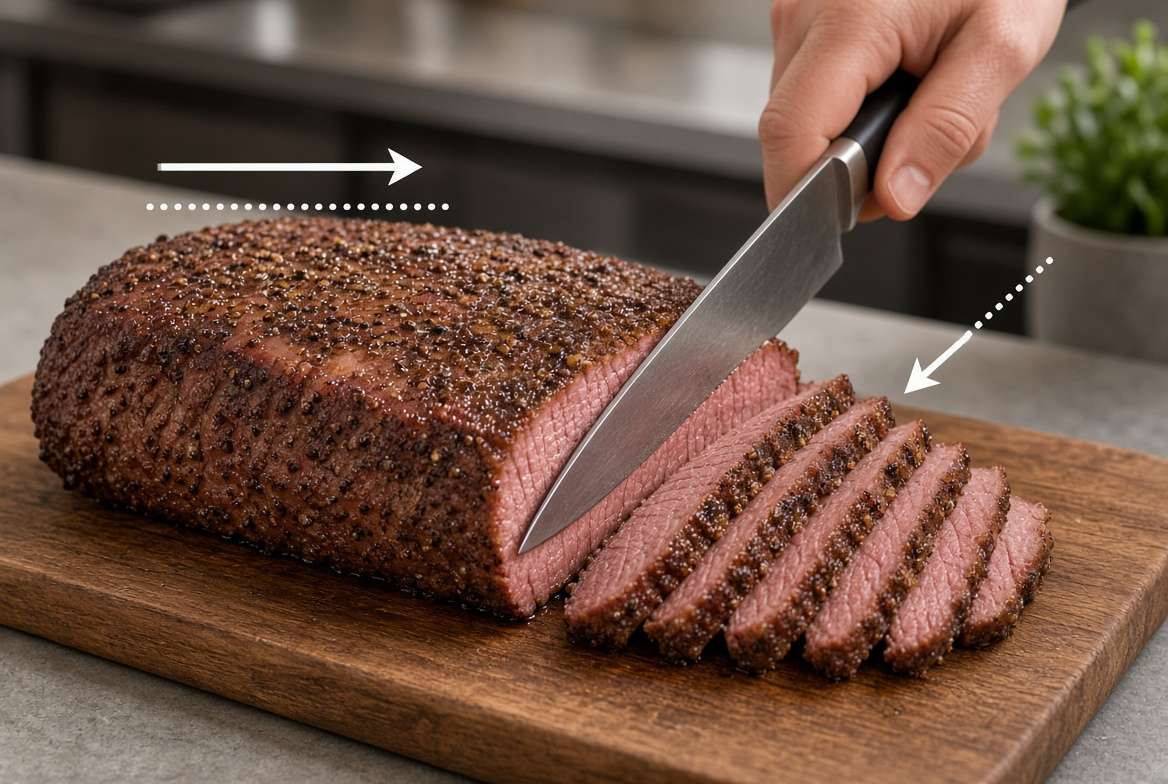
Cutting corned beef the right way means slicing against those lines, not along them. When you cut against the grain, you are shortening the long muscle fibers into small pieces, which makes the meat much easier to chew. If you cut along the grain instead, you leave those long fibers intact, and the meat ends up feeling tough and stringy, no matter how well it was cooked.
Here’s an easy way to remember it: imagine the grain lines are like a bundle of straws lying side by side. If you cut across the straws, you get short little tubes. If you cut along the straws, you just end up with long, whole straws that are hard to bite through. Corned beef works the exact same way.
Dealing With Two Different Grains in One Brisket
One tricky thing about a whole corned beef brisket is that the flat cut and the point cut often have grains running in different directions. This happens because the two muscles sit at an angle to each other.
If you try to slice straight through the whole brisket without paying attention, you might cut against the grain on one side and along the grain on the other. To avoid this, take a moment to separate the flat and the point before slicing, if your brisket includes both.
To separate them, look for the seam of fat that runs between the two muscles. Slide your knife along this seam and gently pull the two sections apart. Once they are separated, you can look at each piece on its own, figure out the grain direction for that specific piece, and slice each one correctly.
This extra step might sound like more work, but it makes a big difference in how tender your final slices turn out.
Step-by-Step Instructions for Slicing Corned Beef
Now let’s break the whole process down into clear steps.
Step 1: Rest the meat. Give it at least ten minutes under loose foil after cooking. This locks in the juices.
Step 2: Place the meat fat-side up on your cutting board. This gives you a clear view of the surface and makes it easier to spot the grain lines.
Step 3: Look closely at the surface to find the grain. Tilt the meat slightly under good light if you need to. The lines should be visible once you know what to look for.
Step 4: Separate the flat and point cuts, if needed. Follow the seam of fat and gently pull or cut the two muscles apart.
Step 5: Turn your knife so it runs perpendicular to the grain. This means your knife should cross the lines at a right angle, not run parallel to them.
Step 6: Slice thin, even pieces. Aim for slices about a quarter inch thick. Thin slices are easier to chew and look neater on a plate.
Step 7: Use smooth, even strokes. Let the knife do the work. Avoid sawing back and forth roughly, since this tears the meat instead of slicing it cleanly.
Step 8: Trim excess fat as you go, if desired. Some people enjoy the fat, but if you prefer leaner slices, trim it off after cutting each piece.
Step 9: Arrange the slices on a serving plate. Fan them out slightly so they stay warm and look appealing.
Following these steps in order will give you clean, tender slices every single time.
Should You Slice Corned Beef Hot or Cold?
Both options work, and it really comes down to what you’re planning to do with the meat.
Slicing corned beef while it is still warm gives you soft, tender pieces that are perfect for serving right away with cabbage, potatoes, and carrots. The warmth keeps the fat soft and the meat juicy.
Slicing it cold works better if you’re planning to use it for sandwiches, like a classic Reuben. Cold corned beef firms up, which makes it much easier to cut into thin, even slices without the meat falling apart. If sandwiches are your goal, let the corned beef cool completely in the fridge, then slice it cold with a sharp knife for that classic deli-style cut.
A helpful trick is to cook the corned beef a day early, chill it overnight, then slice it cold the next day. This is especially useful for parties or gatherings where you need a lot of neat, thin slices ready to go.
Common Mistakes to Avoid
Even with the right steps in mind, a few small mistakes can still throw off your results. Here are the ones to watch out for.
Cutting with the grain instead of against it. This is the most common error and the main reason corned beef ends up chewy. Always double check the direction of the lines before you start slicing.
Skipping the resting period. Cutting into hot meat right away causes the juices to run out, leaving you with drier slices.
Using a dull knife. A dull blade crushes and tears the meat fibers instead of cutting through them cleanly, which ruins the texture.
Slicing pieces too thick. Thick slices are harder to chew, even if you cut against the grain correctly. Thin slices are always easier to eat.
Not separating the flat and point cuts. If your brisket has both sections and you skip this step, you risk cutting one section the wrong way without realizing it.
Rushing the process. Take your time. Corned beef is not a cut of meat you want to rush through. Slow, steady cuts give the best results.
Tips for Serving Sliced Corned Beef
Once your corned beef is sliced, there are plenty of tasty ways to serve it.
- Pair it with boiled cabbage, carrots, and potatoes for a traditional style plate.
- Layer it on rye bread with Swiss cheese, sauerkraut, and dressing for a hearty sandwich.
- Add it to hash with diced potatoes and onions for a filling breakfast dish.
- Toss thin slices into a warm soup or stew for extra flavor and protein.
- Serve it cold on a platter with mustard and pickles for a simple appetizer spread.
Thin, even slices work best for almost all of these serving ideas, which is another reason why taking the time to cut properly really pays off.
Storing Leftover Corned Beef
If you have leftover corned beef after slicing, store it properly so it stays fresh and tasty.
Wrap the slices tightly in foil or place them in an airtight container. Store them in the fridge, where they should stay good for about three to four days. If you want to keep them longer, wrap the slices well and freeze them. Frozen corned beef can last a few months without losing much quality, as long as it’s sealed tightly to avoid freezer burn.
When you’re ready to eat leftovers, gently reheat the slices in a pan with a small splash of water or broth, covered with a lid. This keeps the meat moist instead of drying it out. Avoid microwaving on high power for long periods, since this can toughen the meat again, even if you sliced it correctly the first time.
Frequently Asked Questions
Why is my corned beef tough even after slicing it carefully? This usually happens when the meat wasn’t cooked long enough before slicing. Corned beef needs low, slow cooking to break down the tough fibers in the brisket. If it’s still tough after cutting against the grain, it likely needed more cooking time.
Can I use an electric knife to slice corned beef? Yes, an electric knife can work well, especially for thin, even slices. Just make sure you still follow the grain direction, since the type of knife doesn’t change that rule.
What is the best angle to hold the knife while slicing? Hold the knife at a slight angle, around ten to fifteen degrees, rather than completely straight up and down. This creates wider, more attractive slices and can also help with tenderness.
Do I need to remove the fat before slicing? Not necessarily. Some people trim the fat cap before cooking, others leave it on during cooking and trim it after slicing. It comes down to personal taste.
How thin should each slice be? A quarter inch is a good general target. Thinner slices, closer to an eighth of an inch, work especially well for sandwiches.
Final Thoughts
Cutting corned beef doesn’t need to feel complicated once you understand the basic idea behind it. Rest the meat, find the grain, slice against it, and use a sharp knife with smooth, steady strokes. Pay extra attention if your brisket includes both the flat and point cuts, since they often run in different directions.
With a little practice, you’ll be able to look at any piece of corned beef, spot the grain in seconds, and slice it into tender, even pieces every time. Serve it warm with cabbage and potatoes, or build the perfect Reuben sandwich with it, and you’ll see that knowing how to cut corned beef properly is a small skill that makes a big difference in every bite.

Mary is a home cooking enthusiast and kitchen gear reviewer with a passion for practical cookware and food preparation tools. She enjoys testing cutting boards, knives, kitchen gadgets, and other cooking essentials to help home chefs make smarter buying decisions. Through KitchenCutting.com, Mary shares honest product reviews, buying guides, and helpful kitchen tips to make cooking easier, safer, and more enjoyable.