
5 Best Cutting Board Materials In 2026
As an Amazon Associate we earn from qualifying purchases.
Picking a kitchen cutting board sounds simple, but the material matters more than many buyers expect. The material affects how easy a board is to clean, how gentle it is on knife edges, how well it resists stains and odors, and how it holds up over time. This guide helps beginners who are new to the topic understand the best cutting board materials and how they differ in everyday use.
The five products in this round-up have a few things in common. Each one is sold on Amazon, each is made from a different kind of material, and each claims some level of food safety or easy care.
The comparison below rests on the listed features and typical use of these materials, not on personal testing. It is meant to help you match a material to your cooking habits, if you chop daily or only prepare meals a few times a week.


Product reviews: five cutting board materials compared
Each review below covers one product in the order listed. The sections explain what the product is, how it is likely to feel in daily use, and where it fits best. Pros and cons appear at the end of each review, so you can weigh them against your own kitchen routine.
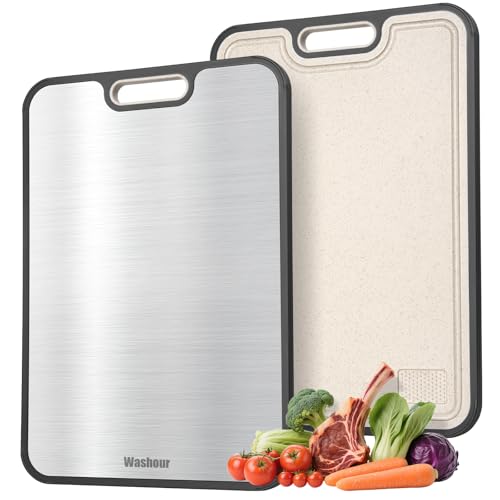
1. Washour Titanium Cutting Board: best for mixed-food kitchens
What this board is
The Washour Titanium Cutting Board is a dual-sided board with a titanium side and a PP side. PP stands for polypropylene, a common food-contact plastic. The listing describes the titanium side for raw meat, seafood and poultry, and the PP side for fruits and ready-to-eat foods.
It is a good fit for people who want a separate surface for raw proteins without buying two boards. For example, a home cook who prepares chicken on one side and salad vegetables on the other can keep the two tasks apart on a single board. It is also suited to small kitchens, dorms and camper setups, based on the product description.
Key features in plain words
The surface is described as dense and sturdy, so it should not form deep grooves that trap food. The board is also described as non-porous, which means liquids and odors should not soak into it. A built-in juice channel is designed to hold runoff from juicy foods, such as sliced tomatoes or thawing meat, so the counter stays drier.
There is also a grinding area for crushing spices, and a hanging hole for drying. The listing notes scratch and stain resistance, with simple rinsing as the main cleaning step. Checking these features against your own habits will help you decide if they matter to you.
Everyday use and performance
In daily use, this board is likely to feel light and easy to move between tasks. Switching between the two sides helps keep raw meat and produce apart. Because the material is described as non-porous, cleanup after a messy prep session should be quick, since there is less residue to work into the surface.
Performance on the knife side depends on how sharp your knives are and how hard you chop. Metal surfaces are generally harder than wood or plastic, so buyers should expect more blade wear than with softer boards. That is a general point about the material, not a measured result for this product. Using a light touch and a sharpening routine can help reduce the effect.
Ease of use and value for money
Ease of use is strong because the board is described as simple to rinse, with no oiling needed. Unlike wood, it does not require regular conditioning to prevent cracking. The dual sides make it easy to organize food by type, which can save time during busy meal prep. At a modest listed price, it sits in the budget-friendly range for multi-purpose boards.
Pros
- Two sides let you separate raw meat from produce.
- Non-porous surface is described as resistant to odor absorption.
- Easy rinse cleaning with no oil or special care.
- Compact size suits small kitchens and portable setups.
Cons
- Metal-side surfaces can dull knives faster than softer boards.
- Hard surfaces can feel noisy and less cushioned during long chopping sessions.
- Smaller footprint may feel tight for large meal prep.
2. anezus Self Healing Sewing Mat: best for crafts and fabric cutting
What this mat is
The anezus Self Healing Sewing Mat is not a kitchen board. It is a five-layer PVC cutting mat designed for rotary cutters and straight blades used in sewing, quilting, scrapbooking and other craft work. The surface is described as self-healing, which means small cuts seal over and leave a smooth surface for the next project. It is a useful reference for anyone who wants to learn how cutting materials differ outside the kitchen.
Many crafters use a mat like this alongside a rotary cutter and a clear acrylic ruler. Together, the three tools make it easier to cut straight strips of fabric and paper. The mat protects the table underneath and keeps the work surface stable.
Key features in plain words
The mat measures about 12 by 18 inches, which the listing gives as A3 size. It has a grid printed in both inches and metric units, along with angle lines to help with precise cuts. Both sides are printed, so you can use whichever side suits your project.
The middle layer is a harder white PVC, which the listing says helps stop blades from cutting all the way through. The product is also described as compatible with rotary cutters and straight blades. Check the listing for the exact thickness before you buy if that detail matters to your work.
Everyday use and performance
In regular use, this mat is likely to lie flat on a table and stay in place while you work. The printed grid makes it easier to line up fabric and measure strips. Because the surface reseals small cuts, the mat should stay usable for many projects before it looks worn.
Performance depends on the blade and the cutting pressure. Rotary cutters work best on a mat with a forgiving surface, and this one is built for that use. A sharp blade and steady, even pressure will give cleaner edges than a dull blade pushed hard. It is not designed for food, so it should never replace a kitchen board.
Ease of use and value for money
Ease of use is simple: lay the fabric down, line up the grid, and cut. There is no cleaning routine beyond wiping the surface. At a low listed price, it is one of the lower-cost options in this round-up, though the price reflects its craft purpose rather than kitchen features.
For beginners, the main value is in the printed grid and the reusable surface. You do not need to replace the mat after each project, so the cost spreads over many sessions. Compare the size against the fabric projects you plan to make before you order.
Pros
- Self-healing surface seals small cuts over time.
- Double-sided printed grid with inches, metric lines and angles.
- Works with rotary cutters and straight blades.
- Low listed price for a reusable craft mat.
Cons
- Not made for food, so it does not belong in a kitchen.
- Size is modest for very large fabric projects.
- Deep or repeated cuts in one spot may still show wear over time.
3. Material MK Free Cutting Board: best for plant-based, dishwasher-safe prep
What this board is
The Material MK Free Cutting Board is a large composite board made from natural clay minerals and biopolymers. The listing says it is free of permanent microplastics and made in Finland. It is positioned for everyday meal prep and weekend cooking, where a board needs to handle several tasks in one session.
It suits buyers who want a non-porous board that can go in the dishwasher and that does not need oiling. Many wooden boards require regular conditioning with mineral oil or board butter to prevent drying and cracking. This board skips that routine entirely.
Its slim profile and large size make it a practical choice for families who cook often and want room to chop vegetables, portion proteins and set out serving items at the same time.
Key features in plain words
The surface is non-porous, so raw meat, fish and produce should not soak into the board. Porous materials can hold onto juices and odors over time, which is one reason many home cooks prefer a surface that wipes clean easily. It has a lightly textured surface that gives a bit of grip under the knife.
The listing says this texture is gentle on blades, which means the edge is less likely to dull quickly compared with glass or stone. A built-in juice groove catches liquid as you cut, such as the juice from a ripe tomato or the drippings from a roast.
The board measures 17.5 by 12 inches and is a quarter inch thick, with a hole for hanging storage. The listing also suggests placing a damp cloth under the board on slick counters such as quartz or marble to keep it from sliding.
A small step like this can make a noticeable difference when you are working quickly with a sharp knife.
Everyday use and performance
In daily use, this board offers a large work area that makes chopping and serving easy. You can move a full batch of diced onions to the pan without crowding the surface. The juice groove keeps counters cleaner during messy jobs, such as slicing melon or trimming poultry.
Dishwasher cleaning means less hand scrubbing after meals, and that saves time on busy weeknights. Knife performance is likely to be gentle on blades compared with harder surfaces. The textured surface helps control the cut, especially when you slice soft produce.
Still, a thin board can flex slightly under heavy chopping, particularly if one edge hangs over the counter. A firm, fully supported counter helps keep the board steady and the cuts even.
Ease of use and value for money
Ease of use is high because the board needs no oiling, does not warp in the usual way wood can, and goes straight into the dishwasher. There is no need to plan around drying time or to hand-wash and store it separately. At the listed price, it sits at the premium end of this round-up.
Buyers pay more for the size, the plant-based composition and the dishwasher-safe care. If those features matter most to you, the extra cost may feel reasonable. If you mainly need a basic board for occasional use, a lower-priced option may suit you better.
Pros
- Dishwasher safe, so cleanup takes little effort.
- Large surface suits family cooking and serving.
- Non-porous, plant-based composition with no permanent microplastics, according to the listing.
- Built-in juice groove and hanging hole add practical touches.
Cons
- Higher listed price than most other boards in this round-up.
- Thin profile can flex under heavy chopping on an unsupported edge.
- Slick counters may need a damp cloth underneath to keep it in place.
4. Epicurean Kitchen Series Cutting Board: best for dishwasher-safe paper composite
What this board is
The Epicurean Kitchen Series Cutting Board in the 11.5 by 9 inch size is made from a paper composite. The listing describes the material as natural and says the board is made in the USA. It is reversible, so both sides can be used for chopping, slicing and serving.
It suits people who want a light, medium-sized board that is easy to wash and store. It is a common choice for home cooks who want a middle ground between wood and plastic. A board this size fits most sinks and dishwasher racks, though the exact fit depends on the machine.
Key features in plain words
The paper composite is described as knife friendly, meaning it should not dull blades as quickly as harder surfaces such as glass or stone. Knives may leave light scoring marks over time.
The listing presents this as a sign that the board is protecting the blade edges, since the softer surface absorbs some of the contact. The board is described as dishwasher safe and heat resistant. It is thin, lightweight and has a built-in thumb hole for hanging on a hook.
The listing also notes that the natural color will darken into a patina over time, much like a wood floor that deepens as it ages. This change is cosmetic and is not a sign of damage.
Everyday use and performance
In everyday use, this board feels light and easy to move from sink to counter. Reversing it spreads out wear across both faces, so one side does not take all the cutting. The dishwasher option means less hand washing after a meal, which helps when cooking for several people.
On the knife side, a softer composite is generally gentler on blades than metal, though light scoring is normal. For example, a board used for daily vegetable prep will show more marks than one used mainly for bread or cheese. Buyers should expect the color to change with use.
The listing states this change does not affect performance.
Ease of use and value for money
Ease of use is strong because the board is simple to clean and easy to store. Its light weight also makes it easier to lift and tip contents into a pan. The listing advises measuring the dishwasher before buying to confirm the board fits, since rack space varies between models.
At the listed price, it sits in the middle of this round-up. If it offers good value depends on how much you value the dishwasher safety and the reversible design compared with wood or plastic options.
Pros
- Dishwasher safe, with heat resistance noted in the listing.
- Reversible design doubles the usable surface.
- Knife friendly, and light scoring is a sign of blade protection.
- Lightweight with a thumb hole for easy storage.
Cons
- Color will change into a patina, and the listing does not guarantee color fastness.
- Light scoring from knives will show over time.
- Dishwasher fit depends on your machine, so measuring first is advised.
5. Epicurean Kitchen Series 8″ × 6″ Cutting Board: best for small tasks and tight spaces
What this board is
The Epicurean Kitchen Series 8 by 6 inch board is the smallest board in this round-up. It uses the same paper composite as the larger Epicurean board. According to the listing, it is non-toxic and made in the USA.
It suits people who need a small surface for quick jobs such as slicing fruit, cheese or a single onion. It is also handy for camping, small apartments or as a second board beside a larger one. Many home cooks keep a small board close to the stove for garnishes and snacks, so the board never has to leave the spot where it is needed.
Key features in plain words
The board is reversible, so both sides can be used. It is dishwasher safe, knife friendly and heat resistant, based on the listing. The thin, lightweight body and thumb hole make it easy to store in a drawer or hang on a hook.
The listing also explains that the natural color will develop a patina over time. This is a normal trait of paper composite and does not change how the board performs, according to the description. A patina is simply a change in surface tone from repeated use and washing, so buyers who prefer a board that stays pale should keep this in mind.
Everyday use and performance
In daily use, this small board is quick to grab and quick to wash. It works well for tasks that do not need much space. Its size limits how much food fits on it at once, so larger batches usually need to be cut in stages.
On the knife side, the composite should be gentle on blades, with light scoring as normal wear. Because the board is small, it can slide on a busy counter, so a folded towel underneath helps keep it steady. Each cut is likely to stay close to the board’s edge, which suits quick, focused prep.
Ease of use and value for money
Ease of use is high because the board is simple to wash and store. Its low listed price makes it one of the more affordable options in this round-up. Buyers who need a second board for small jobs often find this size handy, especially when a larger board is already in use for another task.
Pros
- Compact size suits small tasks, small kitchens and travel.
- Reversible design gives two usable faces.
- Dishwasher safe, with a thumb hole for easy storage.
- Low listed price for a paper composite board.
Cons
- Limited surface area for large meals or bulk prep.
- Small size can slide on smooth counters without a towel underneath.
- Color will darken into a patina over time.
Comparison insights: how the five products differ
The five products fall into two groups. Three are kitchen boards, and two are cutting mats for craft work. Among the kitchen boards, the materials differ in hardness, cleaning method and size, and each difference shapes how the board performs in daily use.
In terms of performance, metal-side and harder surfaces are generally the most demanding on knives. Over time, they can dull a blade faster than softer materials. Softer composites and plant-based boards tend to be gentler on the cutting edge, though they may show knife marks sooner. The anezus mat is built for fabric and paper, so it should not be compared directly with the kitchen boards on food performance.
Ease of use varies more by care routine than by material. Dishwasher-safe boards save time after cooking, which matters most when you prepare meals every day. Rinse-clean boards like the titanium option are quick to wash by hand, too, but they do not go in a machine. The craft mat needs only a wipe with a damp cloth after use.
Value for money depends on what you need. The lower-priced boards suit basic daily use, such as chopping vegetables or slicing bread. The higher-priced composite board costs more because of its size and care features. Your choice should match how much you cook and how often you clean.
Buying guide: key factors for picking a cutting board material
Start with the job you need the board to do. A board for raw meat has different needs from a board for fruit or craft fabric. Knowing the main task narrows the field quickly and keeps you from paying for features you will not use.
Next, think about the knife side. Harder materials such as metal can dull a blade faster. Softer composites, plastics and wood are usually gentler on edges. Most buyers want a balance between blade care and surface durability, since a board that is kind to knives may scar more easily.
Consider cleaning. Dishwasher-safe boards save time, but not every board can go in the machine, and heat can warp some materials over time. Non-porous surfaces resist liquid and odor, which helps when you cut raw foods. Wood needs regular oiling to stay in good condition, so it takes more work for beginners.
Look at size and storage. A large board gives room for big jobs, such as carving a roast or prepping several vegetables at once, but it takes more counter and drawer space. A small board is easy to store but limits how much you can prep at once. A thumb hole or hanging hole helps with drying and storage, because a board that dries fully is less likely to hold moisture and odor.
Finally, check the listed price against your habits. A budget board can work well for light cooking and occasional use. A higher-priced board may suit people who cook daily and want dishwasher convenience, larger working space or extra care features.
Who should buy these products: matching buyers to a board
If you cook mixed foods and want separate sides for raw meat and produce, the Washour Titanium Cutting Board suits you. Its two sides and simple rinse care fit small kitchens and busy routines. Keeping one side for raw proteins and the other for vegetables makes it easier to stay organized during a weeknight meal.
If you cook for a family and want a large, dishwasher-safe board, the Material MK Free Cutting Board fits best. It is the most practical option for big meal prep and serving, though it costs more. A bigger surface gives you room to chop several ingredients at once, so you spend less time moving things around.
If you want a light, reversible board that goes in the dishwasher, one of the Epicurean boards suits you. The larger 11.5 by 9 inch board works for everyday cooking. The 8 by 6 inch board suits small tasks, travel and a second surface. Many cooks like having a small board nearby for herbs, cheese or quick slicing.
If you sew, quilt or do other craft cutting, the anezus Self Healing Sewing Mat is the right tool. It is not a kitchen product, so keep it away from food prep. Using one surface for fabric and another for food helps prevent cross-contact and keeps each tool in its proper role.
Final verdict
No single material wins for every buyer. Titanium and PP suit mixed-food kitchens with limited space. Composites and plant-based boards suit people who want dishwasher safe, low-maintenance daily prep. The paper composite boards suit light, reversible everyday use.
For most beginners, the best choice depends on cleaning habits and knife care. Think about the job first, then choose the material that fits it. If you only have room for one board, pick the size that matches the meals you cook most often. Keep craft mats separate from food boards so each one stays in its proper role.
Frequently Asked Questions
Which cutting board material is gentlest on knives?
Softer materials such as paper composites and plant-based boards are generally gentler on blades than metal. Harder surfaces tend to dull edges faster. Light scoring from a knife is normal on many composite boards, and it does not always mean the board is worn out.
Can I put a cutting board in the dishwasher?
Some boards are listed as dishwasher safe, such as the Material MK and Epicurean boards. Others, like the titanium board, are described as rinse-clean only. Always check the care details for the specific board before washing, because heat and detergent can damage some materials over time.
Should I use a separate board for raw meat?
Many cooks keep one board for raw meat and another for produce and ready-to-eat foods. A dual-sided board can help you do this with one product, as long as you clean each side well before switching tasks. Washing between uses is still important, whichever setup you choose.
Is a craft mat safe to use for food?
No. The anezus Self Healing Sewing Mat is designed for fabric and paper. It is not made as a food-prep surface, so it should stay out of the kitchen. Keeping it separate also protects your food from dust, dyes and other craft materials.
Does a cutting board change color over time?
Some composite boards, such as the Epicurean paper composite models, develop a patina that darkens the natural color. The listing says this does not affect performance. Light knife marks can also appear with normal use, and these are a common part of owning a board rather than a defect.

Mary is a home cooking enthusiast and kitchen gear reviewer with a passion for practical cookware and food preparation tools. She enjoys testing cutting boards, knives, kitchen gadgets, and other cooking essentials to help home chefs make smarter buying decisions. Through KitchenCutting.com, Mary shares honest product reviews, buying guides, and helpful kitchen tips to make cooking easier, safer, and more enjoyable.


