Ceramic Knives vs Steel Knives
If you spend any time cooking, you know a good knife can make or break your whole experience in the kitchen. Chopping onions, slicing tomatoes, or breaking down a chicken all feel easier when your blade is sharp and comfortable in your hand. But when it comes time to buy a new knife, you run into a big question: should you go with a ceramic blade or stick with good old steel?
In this article
Both types have loyal fans. Some cooks swear by ceramic because it stays sharp for a long time. Others trust steel because it feels tough, reliable, and easy to fix when it gets dull. In this post, we will break down both options in plain, simple terms so you can figure out which one fits your kitchen, your budget, and your cooking style.
Let’s dig in.
A Quick Look At Ceramic Knives
Ceramic knives are made from a hard material called zirconium oxide. This is not the same clay used to make coffee mugs or plant pots. It is a super-hard substance that gets baked at extremely high heat until it turns into a blade that is harder than most steel.
Because of this process, ceramic blades come out incredibly hard, light, and sharp right out of the box. They also have a smooth, glossy look that many people find attractive on a kitchen counter.
What Makes Ceramic Blades Stand Out
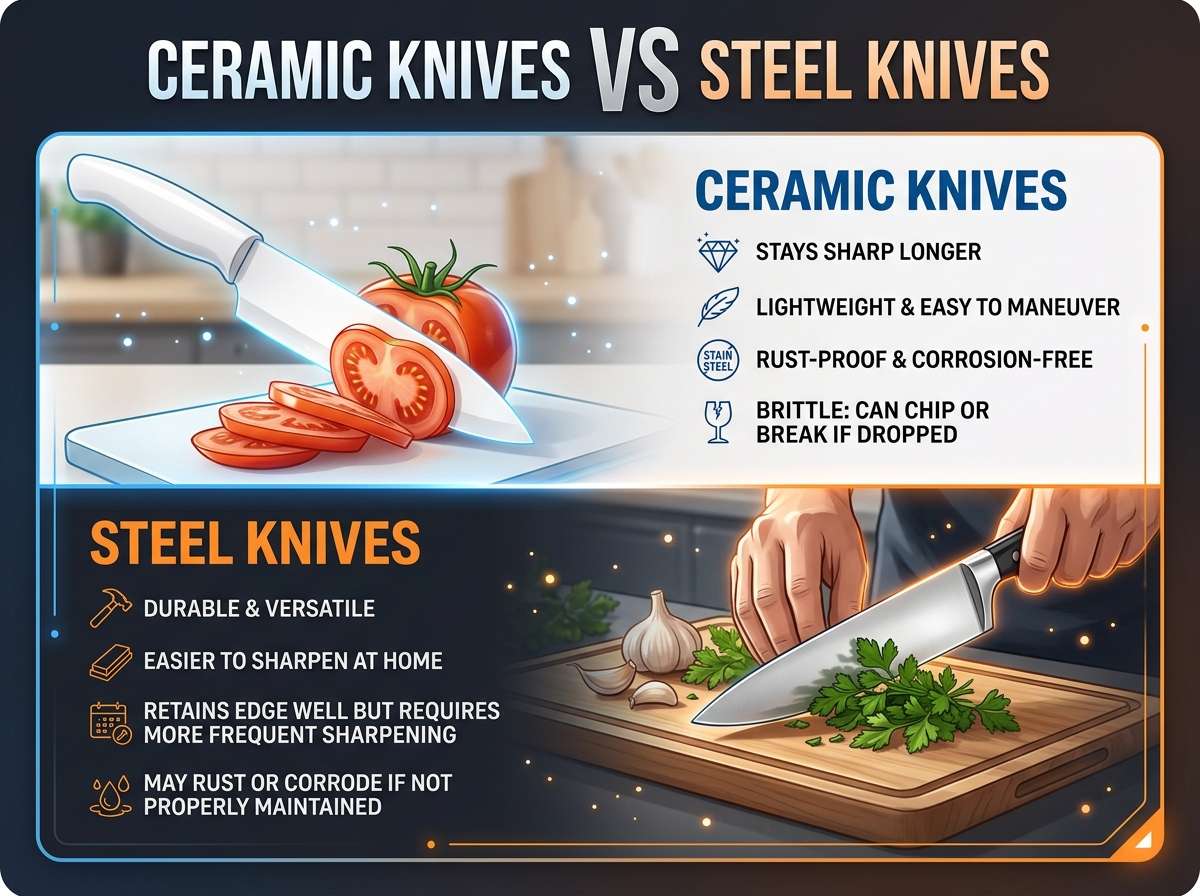
They stay sharp for a long stretch of time. Since the material is so hard, the edge does not wear down quickly. You can slice fruits, vegetables, and boneless meat for months before you notice any dullness.
They are light as a feather. Ceramic knives weigh much less than steel ones. If you have wrist pain or just prefer a lighter tool, this can feel like a relief during long prep sessions.
They do not react with food. Steel can sometimes leave a faint metallic taste or smell on certain foods, especially acidic ones like lemons or tomatoes. Ceramic does not do this, so your food tastes exactly as it should.
They resist stains and rust. You never have to worry about ceramic blades rusting, even if you forget to dry them right away. They also will not pick up stains from foods like beets or turmeric.
Where Ceramic Knives Fall Short
They are brittle. This is the biggest downside. Ceramic is hard, but hard does not always mean tough. Drop a ceramic knife on a tile floor, and there is a real chance the blade will chip or snap. Steel can handle a drop far better.
They cannot cut through bone or frozen food. Try to use a ceramic blade on a chicken bone or a block of frozen meat, and you risk chipping the edge instantly. These knives are made for soft to medium-firm foods, not heavy-duty tasks.
Sharpening is tricky. You cannot use a normal sharpening stone on a ceramic blade. You need a diamond sharpener or you have to send it to a professional. This adds cost and hassle over time.
They can crack under pressure. Twisting the blade or using it as a lever (like prying open a jar lid) can cause it to snap. Ceramic asks for a gentle touch.
A Quick Look At Steel Knives
Steel knives have been around for ages, and there is a good reason they remain the top pick in most kitchens, restaurants, and butcher shops around the world. Steel blades are made from metal alloys, usually stainless steel or high-carbon steel, and each type brings its own strengths to the table.
What Makes Steel Blades Stand Out
They are tough and durable. Steel can handle heavy use. You can cut through bone, frozen food, tough squash, and thick cuts of meat without much worry. Drop a steel knife, and it might get a small scratch, but it will not shatter like ceramic.
Sharpening is simple. Almost every kitchen has a sharpening stone, honing rod, or pull-through sharpener that works great on steel. You can keep the blade in top shape at home without sending it anywhere.
They come in endless styles. From chef knives to paring knives to cleavers, steel comes in every shape and size you can imagine. This gives you way more choices depending on your cooking needs.
They handle a wide range of tasks. Steel knives cut through almost anything: meat, bone, hard vegetables, bread, and even packaging in a pinch. Ceramic simply cannot match this kind of flexibility.
Where Steel Knives Fall Short
They can rust or stain if you ignore them. High-carbon steel especially needs regular drying and oiling to avoid rust spots. Even stainless steel can develop small stains over time if left wet for too long.
They lose their edge faster than ceramic. Steel blades need honing every few uses and a full sharpening every few months, depending on how often you cook.
They can pick up a metallic smell. Cutting citrus fruits or onions on steel sometimes leaves a faint metal smell on your hands or on the food itself. This effect is small, but some people notice it.
They tend to weigh more. For people with hand or wrist issues, a heavy steel chef knife can feel tiring during long cooking sessions.
Ceramic Knives vs Steel Knives: Side-By-Side Comparison
Let’s put both side by side so you can scan the differences quickly.
Sharpness retention: Ceramic wins here easily. It holds an edge far longer than steel.
Durability against drops and twists: Steel wins by a mile. It bends before it breaks, while ceramic tends to chip or shatter.
Weight: Ceramic is lighter, which some cooks love and others find odd since a knife with more weight often feels more natural for chopping.
Versatility: Steel wins here too. It can cut through bones, frozen items, and tough produce, tasks ceramic simply cannot handle.
Ease of sharpening: Steel is much easier to sharpen at home with tools most people already own.
Rust and stain resistance: Ceramic wins since it never rusts and rarely stains.
Price: Steel knives range from cheap to very expensive, giving you more budget-friendly options. Ceramic tends to sit in the mid to high price range across the board.
Food taste neutrality: Ceramic wins slightly since it does not carry any metallic taste onto food.
How Each Knife Performs In Real Kitchen Tasks
Slicing Fruits And Vegetables
Both knives handle this task well, but ceramic often has a slight edge (pun intended) since the blade stays razor sharp for longer stretches. Tomatoes, cucumbers, apples, and other soft produce slice cleanly with either option.
Cutting Meat
Steel takes the lead here. If you plan to trim fat, cut through small bones, or break down a whole chicken, a steel knife handles the job with far less risk of damage. Ceramic can slice boneless cuts just fine, but bones are a hard no.
Chopping Herbs
Ceramic knives shine when it comes to herbs like basil, cilantro, or parsley. Their sharp edge slices through leafy greens without bruising them, which helps keep flavor and color intact.
Cutting Bread
Neither ceramic nor plain steel straight blades are ideal for bread. You usually want a serrated steel knife for this task since the saw-like edge tears through crust without crushing the soft inside.
Prepping Frozen Food
Steel wins without question. Ceramic blades chip easily against anything frozen or hard, so save your ceramic knife for softer ingredients.
Price And Value For Money
When you look at the price tags, steel knives offer a wider range. You can find a solid stainless steel chef knife at a low price point, or you can spend a lot more on a high-carbon Japanese blade built by skilled artisans. This flexibility makes steel a good fit for almost any budget.
Ceramic knives tend to sit in a narrower price range, often landing in the mid-tier zone. You are paying for the manufacturing process, which involves intense heat and precision shaping. Cheap ceramic knives do exist, but they often chip faster and dull quicker than higher-quality versions.
If you want long-term value and plan to use your knife heavily, steel usually pays off more over time since it lasts through rough treatment and stays useful even after years of hard use.
Maintenance And Care Tips
Caring For Ceramic Knives
- Wash by hand with mild soap and a soft sponge.
- Avoid tossing it into a sink full of other dishes where it could bump against metal pots.
- Store it in a knife block, sheath, or blade guard to protect the edge.
- Never use it to pry, twist, or cut through bone.
- Take it to a professional sharpener or use a diamond sharpening tool when needed.
Caring For Steel Knives
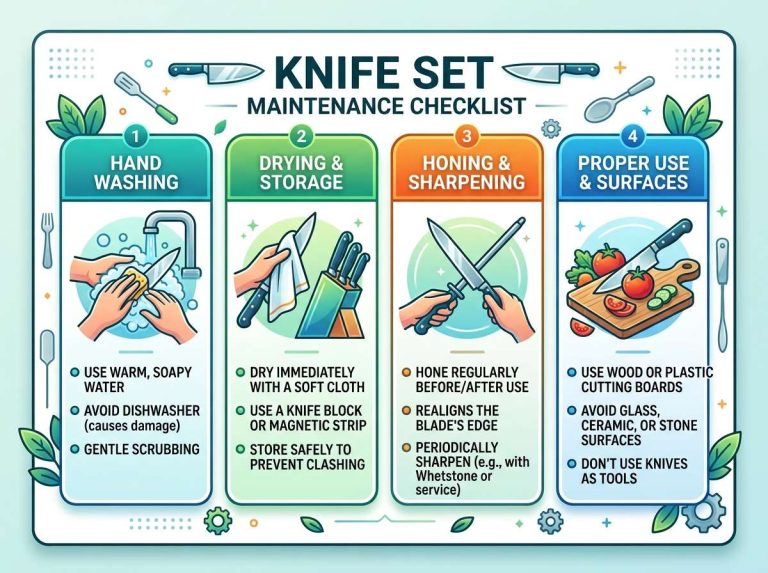
- Wash and dry it right after use to prevent rust or water spots.
- Hone the blade regularly with a honing rod to keep the edge aligned.
- Sharpen every few months with a whetstone or sharpening tool.
- Store it in a wooden block, magnetic strip, or blade guard, not loose in a drawer.
- Apply a light coat of oil on carbon steel blades if you plan to store them for a while.
Safety Considerations
Ceramic blades feel razor sharp, sometimes even sharper than steel fresh out of the box. Because of this, many home cooks accidentally cut themselves since they underestimate how easily the blade slices through skin. Always handle ceramic knives with the same care and attention as a sharp steel blade, maybe even more.
Steel knives, especially ones that have gone dull, can actually cause more injuries since a dull blade tends to slip instead of cutting cleanly. Keeping your steel knife sharp is not just about performance, it is also a safety habit worth building.
Which One Should You Buy?
This really comes down to how you cook and what tasks fill up most of your kitchen time.
If you mostly slice fruits, vegetables, and boneless meat, and you like a lightweight blade that holds its edge for a long stretch, a ceramic knife could feel like a great fit for your daily routine.
If you cook a wide variety of foods, including meat with bones, frozen ingredients, or tougher produce like squash and pumpkin, steel gives you way more flexibility and toughness. It also tends to be easier to maintain since sharpening tools are cheap and widely available.
Many home cooks actually end up owning both. They keep a ceramic knife on hand for light, precise tasks like slicing herbs or fruit, and rely on a trusty steel chef knife for the heavier, everyday workload. This combo lets you enjoy the strengths of each blade without dealing with their weaknesses.
Common Questions People Ask
Can ceramic knives cut through bone? No. Ceramic blades are hard but brittle, so cutting bone risks chipping or breaking the edge completely.
Do ceramic knives rust? No. Ceramic never rusts since it is not made from metal.
How often do steel knives need sharpening? It depends on how often you cook, but a light sharpening every few months along with regular honing keeps most steel blades performing well.
Are ceramic knives dishwasher safe? Most brands recommend hand washing only. Dishwashers can cause the blade to knock against other items, leading to chips or cracks.
Which knife type lasts longer overall? Steel usually lasts longer in terms of overall lifespan since it can handle drops, twists, and rough treatment far better than ceramic.
Is ceramic sharper than steel? Right out of the box, yes, ceramic often feels sharper. But steel can be sharpened to match or exceed that sharpness with the right tools.
Final Thoughts
Both ceramic and steel knives bring real strengths to the table, and neither one is flat-out better than the other. It all comes down to your personal cooking habits, how much care you want to put into maintenance, and what kind of foods you cut most often.
If sharpness and light weight matter most to you, ceramic will treat you well as long as you handle it gently. If you want a tough, flexible blade that can survive years of heavy kitchen use, steel remains the trusted classic for good reason.
No matter which one you pick, taking care of your knife through proper washing, storage, and sharpening will help it serve you well for a long time. A good blade, paired with good habits, turns everyday cooking into a smoother, safer, and more enjoyable task.

Mary is a home cooking enthusiast and kitchen gear reviewer with a passion for practical cookware and food preparation tools. She enjoys testing cutting boards, knives, kitchen gadgets, and other cooking essentials to help home chefs make smarter buying decisions. Through KitchenCutting.com, Mary shares honest product reviews, buying guides, and helpful kitchen tips to make cooking easier, safer, and more enjoyable.