
5 Best Cutting Board for Meat In 2026
A cutting board looks like a simple tool, but it does a lot of hard work in a kitchen. It takes the knife hits, the raw chicken juice, the steak resting time, and the daily scrubbing. If you cook meat often, the board you use matters more than most people think. The best cutting board for meat keeps juice under control, stays steady on the counter, cleans up fast, and does not wreck your knives.
In this article
This guide covers five popular boards: a titanium board, a stainless steel board, a three-piece plastic set, an extra large bamboo board, and a bamboo set with deep juice grooves. Each one has strengths and weak spots. I explain both in plain words so you can pick what fits your kitchen.
One note first. Brands change small details over time, such as thickness, handle shape, and groove depth. Always read the current product listing before you buy. I stick to the main features each product is known for and point out where you should double-check.
Quick Look: Best Cutting Board for Meat at a Glance
| Product | Material | Best For | Knife-Friendly? | Dishwasher Safe? |
|---|---|---|---|---|
| Titanium Cutting Board (16″ × 11″) | Pure titanium and PP | Raw meat, fish, hygiene-focused cooks | Fair | Check the listing |
| SNOWCLAD Stainless Steel Board | Stainless steel | Raw meat, easy sanitizing | Fair to low | Usually yes, check the listing |
| GORILLA GRIP Set of 3 | Plastic (non-porous) | Everyday meat prep, budget buyers | Good | Yes |
| Empune Extra Large Bamboo Board | Bamboo | Big cuts, carving, general prep | Good | No, hand wash |
| ROYAL CRAFT WOOD Bamboo Set | Bamboo | Meat prep and serving, variety | Good | No, hand wash |
Why the Right Board Matters When You Cook Meat
Raw meat is different from carrots or bread. It leaks juice, and that juice can carry bacteria such as salmonella and E. coli. A board with deep scars or a soft, porous surface can trap those germs. Your board also affects how safe your food is, how long your knives stay sharp, and how messy your counter gets.
Here is what a good meat board should do:
- Hold juice in a groove so it does not run onto the counter.
- Resist deep cuts where bacteria can hide.
- Stay in place while you slice.
- Clean up easily with soap and hot water.
- Feel good under the knife.
No single board is perfect at all five. That is why the “best” one depends on how you cook. Let’s go through each product.
1. Titanium Cutting Board for Kitchen, Pure Titanium/PP, 16″ × 11″
Product Description
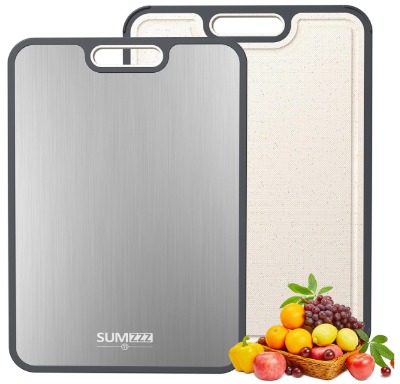
This board has two sides. One side is pure titanium, and the other is food-grade PP (polypropylene plastic). The size is 16 by 11 inches, which fits most counters and most sinks. It is a medium board, big enough for a couple of chicken breasts or a small roast, but not huge.
The idea behind a titanium board is simple. Metal does not soak up liquid, so raw meat juice stays on top instead of sinking in. Most buyers use the titanium side for meat and fish and the PP side for fruit, bread, and vegetables.
Best Use Cases
This board suits people who want a clean, modern tool and plan to use it for raw proteins. It works well for:
- Trimming and slicing raw chicken, pork, and beef
- Prepping fish fillets
- Cutting meat for stir fry or skewers
- Kneading dough or rolling pastry on the smooth metal side, since it does not stick much
Key Features Explained Simply
Titanium side. Titanium is a strong, light metal. Its surface does not absorb liquid or smells, so garlic, fish, and raw meat should not leave odors behind.
PP side. The plastic side gives you a softer surface for jobs where you do not want metal. It also keeps raw meat and ready-to-eat food on separate sides, which cuts the risk of cross-contamination.
Easy rinse. Smooth metal rinses clean quickly. A little dish soap and hot water usually does the job.
Slim shape. Metal boards tend to be thin, so this one stores easily in a drawer or on a rack.
Real-Life Usage Insight
In everyday use, a titanium board feels very different from wood or plastic. The surface is hard, so you hear a sharper tap with each knife stroke. For slicing raw chicken or trimming fat, that is not a big problem. The board stays flat and clean, and the juice wipes off in seconds.
The thing to watch is your knife edge. Metal is harder than most knife steel in some cases and always harder than wood or plastic, so a very sharp edge can lose its bite sooner than it would on bamboo or soft plastic. Use a honing rod and sharpen on schedule if you pick a metal board. Also use a light touch. Skip hard chopping or hacking motions. Heavy cleaver work does not belong on this board.
Another point: thin boards can slide on a smooth counter. A damp cloth or a non-slip mat underneath fixes that.
Performance Discussion
For raw meat prep, the surface does what it should. It stays clean and does not trap odors. It does not warp, crack, or stain. It handles trimming and slicing well.
It is less ideal for carving a big roast, because most versions of this board do not offer a deep juice well. If your listing shows a groove, great. If it shows a flat surface, watch the edges when you cut juicy meat.
Ease of Use and Cleaning
Cleaning is quick. Rinse, wash with soap, dry. Because the surface is non-porous, you do not need to oil it like a wooden board. Dry it well after washing to avoid water spots. Check the listing to see if the board is dishwasher safe, since the PP side and the metal may react differently to heat.
Value for Money
Titanium boards sit in the mid to higher price range for a single board. You pay extra for the material and the two-sided design. If you want a long-lasting, hygienic board and you do not mind the knife trade-off, the price feels fair. If you want the cheapest option, plastic or bamboo wins.
Pros
- Non-porous surface that resists juice, stains, and odors
- Two-sided design helps keep raw meat apart from other foods
- Slim and light, easy to store
- Does not crack, warp, or splinter
- Quick to rinse clean
Cons
- Harder surface can dull knives faster than wood or plastic
- Can feel loud under the knife
- May slide on smooth counters without a mat
- Medium size, so not ideal for very large roasts
- Costs more than basic plastic or bamboo
Verdict
A titanium board is a clean, modern pick for people who cut raw meat often and care most about hygiene. Keep your knives honed and you will get steady, trouble-free use.
2. SNOWCLAD Stainless Steel Cutting Board, Non Toxic Chopping Board for Kitchen
Product Description
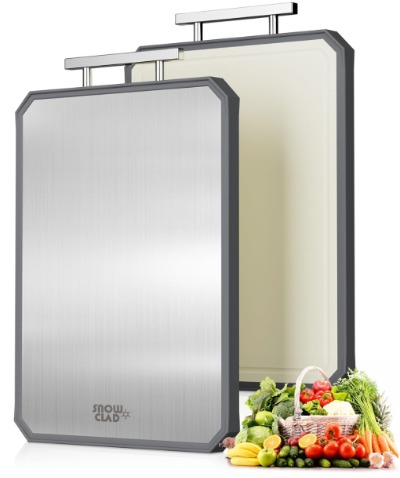
The SNOWCLAD board is a stainless steel cutting board marketed as non-toxic and easy to clean. Stainless steel is the same kind of metal used in sinks and commercial kitchens, so it is no surprise to see it here. The board has a smooth, flat work area and a slim profile.
Some listings for boards like this show a second material on the back or a small grip feature. Details change, so read the current listing for the exact build.
Best Use Cases
This board is a good match if you:
- Prep raw chicken, fish, or beef often
- Want a surface that you can sanitize without worry
- Prefer a board that does not hold smells
- Need a spare board just for raw proteins
It also works well for rolling dough and handling sticky food, because the smooth metal does not grab onto it.
Key Features Explained Simply
Stainless steel surface. The metal does not soak up liquid. Raw meat juice stays on top where you can wipe it off.
Non-toxic claim. The brand says the board is made without harmful coatings or chemicals. That is a good feature for anything that touches food. Look for any food-grade or safety details in the listing to back it up.
Thin and light. The board is easy to lift, rinse, and hang or stack.
Odor resistance. Garlic, onion, and fish smells do not stay on stainless steel the way they can in wood.
Real-Life Usage Insight
Stainless steel boards give you an honest, no-fuss work surface. After slicing raw chicken, you can rinse it under hot water, scrub with soap, and be done. There is no oiling, no sanding, and no worry about juice soaking in.
The trade-off is the knife feel. Stainless steel is tough, and your blade meets a hard surface instead of a forgiving one. A good knife will still cut well, but the edge may wear sooner. Many cooks fix this by using a stainless board for raw proteins only and keeping a softer board for everything else.
You may also notice scratches on the surface over time. Those are mostly cosmetic on metal, but they can leave tiny marks. Clean the board well after each use. You can also hear the knife more. If a quiet kitchen matters to you, this will stand out.
Performance Discussion
For raw meat prep, stainless steel does what it promises. It stays clean, does not stain, and does not hold bacteria in deep cuts the way an old wooden board might. It does not hold odors, either.
Where it falls short is carving and heavy chopping. The surface is hard, so big cleaver swings are a poor idea. It is also less pleasant for fine slicing because a knife can feel like it skates on the surface. For steady, straight cuts, though, it does the job.
Ease of Use and Cleaning
Cleaning is the main selling point. Hot water, soap, a scrub, and a dry towel are all you need. Many stainless boards are dishwasher safe, but check the listing first. Dry it right away to avoid water marks.
Value for Money
Stainless boards usually cost a bit less than titanium and a bit more than plastic. If hygiene and easy cleaning matter to you, the price is reasonable. If knife care is your top concern, bamboo or plastic offers better value.
Pros
- Non-porous, so juice and odors do not soak in
- Very easy to rinse and sanitize
- Thin, light, and easy to store
- Does not warp, crack, or stain
- Handy as a dedicated raw meat board
Cons
- Hard surface is rough on knife edges
- Louder to use than wood or plastic
- Can slide on smooth counters
- Surface scratches show over time
- Less comfortable for heavy chopping or carving
Verdict
The SNOWCLAD board is a practical, no-nonsense tool for raw meat prep. Use it as your dedicated protein board, keep your knives honed, and it will serve you well.
3. GORILLA GRIP Cutting Board Set of 3, Slip Resistant and Nonporous, Black
Product Description
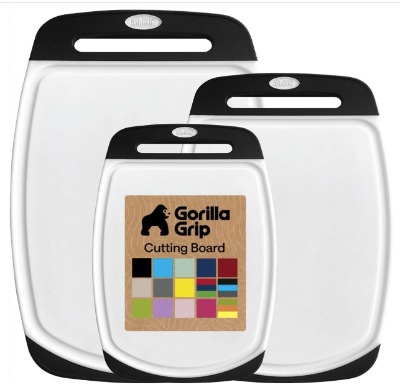
This is a set of three plastic boards in different sizes: a large one, a medium one, and a small one. They are black, which hides stains. The brand highlights two features: non-slip edges and a non-porous surface. The boards also include a juice groove, which helps with raw meat.
A three-piece set gives you options. You can use one board for raw meat, one for vegetables, and one for bread or snacks. That kind of separation is exactly what food safety experts suggest.
Best Use Cases
This set shines in busy home kitchens. It works well for:
- Prepping raw chicken, steak, pork, and ground meat
- Keeping meat and vegetables on separate boards
- Weeknight cooking where you want fast cleanup
- First-time cooks who want a simple, low-cost setup
The small board is great for trimming a single steak or slicing a lemon. The large one handles a whole chicken or a pile of vegetables.
Key Features Explained Simply
Non-porous plastic. The surface does not soak up juice, so raw meat does not sink into the board. That makes it easier to keep clean.
Slip-resistant edges. The rubber-like border grips the counter. This keeps the board from sliding while you slice, which is a real safety win.
Juice groove. A groove around the edge catches liquid so it does not run across your counter.
Dishwasher safe. You can run these boards through the dishwasher, which saves time. Check the care label and use the top rack to reduce warping.
Three sizes. Each size fits a different job.
Real-Life Usage Insight
Plastic boards are gentle on knives. Your blade glides into the surface and does not feel like it bounces. That means your edge lasts longer than it would on a metal board. For daily meat prep, that matters a lot.
The non-slip edges make a real difference. Cutting a slippery piece of raw chicken is much easier when the board stays put. The groove catches juice well enough for normal prep, but it is not made for carving a big, juicy roast.
Black boards hide stains from tomato sauce, turmeric, and meat juice. That is a nice bonus. The downside is that black boards also hide knife scars, so you may not notice when the surface is worn out. Check it by touch. If you feel deep grooves, it is time to replace the board.
Performance Discussion
For everyday meat prep, this set performs well. It is stable, easy to clean, and kind to your knives. The juice groove handles normal amounts of liquid. The slip-resistant border keeps things steady.
It is not perfect. Plastic can scar with heavy cutting, and those scars can trap bacteria if you do not clean the board well. Light chopping and slicing are fine. Heavy cleaver work will leave deep marks.
Ease of Use and Cleaning
This set is very easy to clean. Hot water and soap work, and the dishwasher is an option. Dry the boards fully before stacking them. The set stores flat in a drawer or a rack.
Value for Money
This is where the set stands out. You get three boards for a budget price. If you cook meat often and want separate boards for different foods, this is hard to beat. You can replace worn boards without feeling bad, which is also a good safety habit.
Pros
- Three sizes for different jobs
- Slip-resistant edges keep the board steady
- Juice groove helps with raw meat
- Gentle on knives
- Dishwasher safe and easy to clean
- Budget friendly
Cons
- Plastic scars over time and needs replacing
- Black color can hide wear
- Not the best for carving big roasts
- Less attractive for serving
- Thin boards can flex a little
Verdict
For most beginners, this set offers the best balance of safety, price, and ease. It is the practical answer if you want a simple, reliable board for raw meat without spending much.
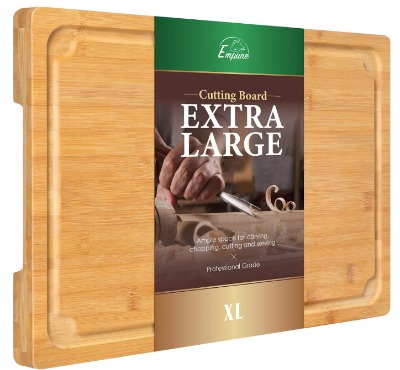
4. Empune Extra Large Cutting Board, 17.6″ Bamboo Cutting Boards for Kitchen
Product Description
The Empune board is an extra large bamboo board, around 17.6 inches on its long side. Bamboo is a fast-growing grass that makes a hard, dense board. It looks warm and natural, and it feels good under a knife.
Large boards give you room to work. You can cut a full chicken, trim a big pork shoulder, or slice a brisket without meat hanging off the edge. Most boards of this type also include a juice groove and finger grips, but check the listing for the exact design.
Best Use Cases
This board is a good fit if you:
- Cook large cuts like roasts, whole chickens, or ribs
- Want a big surface for prep and carving
- Like the look of natural material
- Prefer a quieter, gentler cutting surface
It also works as a serving board for sliced meat, cheese, and bread, which makes it handy for family dinners.
Key Features Explained Simply
Bamboo surface. Bamboo is harder than many woods, which helps it resist cuts. It is also lighter than most hardwoods.
Extra large size. More room means less mess. Meat stays on the board instead of sliding off the edge.
Juice groove. If your version has one, it catches liquid from carving. This keeps your counter cleaner.
Natural look. It looks good enough to carry to the table.
Real-Life Usage Insight
A big bamboo board changes how you cook. You stop crowding the surface. You can trim a chicken on one side and slice vegetables on the other, though you should still clean the board between raw meat and other foods.
Bamboo is easier on your knives than metal, but it is a bit harder than a soft wood board. Some cooks notice an edge wearing slightly faster than on a soft plastic board. That is normal and easy to manage with regular honing.
Bamboo is not fully non-porous. It can absorb a little liquid if you leave it wet. After cutting raw meat, wash it right away with hot, soapy water and dry it with a towel. Never soak it or put it in the dishwasher. Water can crack or warp it. A light coat of food-safe mineral oil every few weeks keeps the surface in good shape.
Size also has a downside. A big board is heavy and awkward to wash in a small sink. It can also be tough to store. Measure your sink and cabinet space before you buy.
Performance Discussion
For slicing and trimming meat, this board performs very well. It is steady, quiet, and gentle on blades. The large surface makes carving much easier than on a small board.
It is not as hygienic as non-porous plastic or metal if you do not care for it properly. A well-kept bamboo board is fine for raw meat. A neglected one with deep cuts and moisture is not. If you want one board for everything, wash it well and consider using a separate board for raw poultry.
Ease of Use and Cleaning
Hand wash only. Use hot water, mild soap, and a brush, and then dry it standing up. Oil it from time to time. This takes a little more effort than plastic, but the care is simple once it becomes a habit.
Value for Money
Extra large bamboo boards usually cost a moderate price. You get a lot of surface and a good-looking board that can double as a serving tray. For cooks who handle big cuts, the size is worth the price.
Pros
- Extra large surface for roasts and big cuts
- Gentle on knives
- Looks nice enough for serving
- Quiet to use
- Natural material
Cons
- Hand wash only
- Needs occasional oiling
- Heavy and bulky to store and wash
- Can absorb liquid if left wet
- Needs more care than plastic or metal for raw meat
Verdict
The Empune board is a great pick if you cook big cuts of meat and want a roomy, good-looking surface. It rewards good care. If you will wash and dry it right after each use, it is a solid choice.
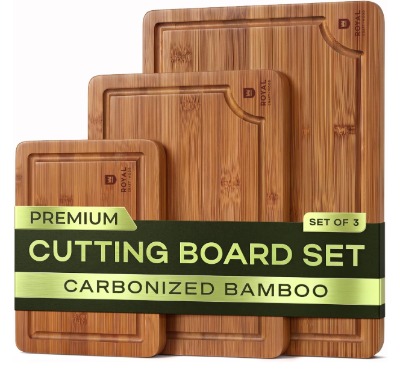
5. ROYAL CRAFT WOOD Bamboo Cutting Board Set
Product Description
The ROYAL CRAFT WOOD set gives you several bamboo boards in different sizes. The set is built with a deep juice groove, side handles, and a butcher-block style design. The product is sold for meat prep, meal prep, and serving, so it tries to do a lot at once.
The deep groove is the main feature for meat. It holds a good amount of liquid, so carving a roast or slicing a juicy steak is less messy. The side handles make it easier to move the board from counter to table.
Best Use Cases
This set suits cooks who:
- Carve roasts, turkey, or chicken
- Slice steaks and let juice collect in the groove
- Want boards for both prep and serving
- Like to host and serve meat, cheese, and bread on a board
- Want multiple sizes for different jobs
Key Features Explained Simply
Deep juice groove. This is the star feature for meat. A deeper groove catches more liquid, so it keeps the counter clean while you carve.
Side handles. Handles make the board easy to carry, especially with a heavy roast on top.
Bamboo construction. Bamboo is dense, fairly hard, and good-looking. It is gentler on knives than metal.
Set of multiple sizes. You can use the large board for roasts, a medium board for general prep, and a small one for quick jobs or serving snacks.
Dual use. The boards work for prep and for the table, which saves you from owning two sets of boards.
Real-Life Usage Insight
Deep grooves matter more than people expect. When you slice a rested steak or carve a roast chicken, juice keeps coming out. On a flat board, that juice flows over the edge. A deep groove catches most of it so you can pour it into a sauce or just wipe it away.
Handles are a small but nice detail. Carrying a heavy board with hot meat is much easier when you can grip the sides. Because the boards also look good, you can bring the roast straight to the table.
Like any bamboo board, these need proper care. Hand wash after each use. Dry them right away. Oil them every so often with food-safe mineral oil. Do not soak them, and keep them out of the dishwasher.
Having several boards helps a lot with food safety. You can use one for raw meat only and keep the others for vegetables and serving. That habit alone cuts the risk of cross-contamination.
Performance Discussion
For carving and slicing, this set is one of the stronger options in the lineup. The deep groove and handles make it practical. The bamboo surface feels good under the knife and holds up to everyday use.
For raw meat prep, it works if you keep up with cleaning. Because bamboo is not as sealed as plastic or metal, you should be strict about washing and drying. If you cut raw poultry often, think about reserving one board for that job.
Ease of Use and Cleaning
Hand washing takes a few extra minutes, and the care routine is a bit more work than plastic. That said, the process is easy once you build the habit. A scrub brush, warm soapy water, and a dry towel are all you need.
Value for Money
A multi-piece bamboo set with a deep groove and handles offers strong value. You get variety, good looks, and meat-friendly design in one package. It costs more than a basic plastic set but gives you boards that double as serving pieces.
Pros
- Deep juice groove catches plenty of liquid
- Side handles make carrying easy
- Several sizes for different tasks
- Looks nice for serving
- Gentle on knives
Cons
- Hand wash only
- Needs regular oiling
- Not as sealed as plastic or metal
- Takes more space to store a full set
- Can warp if you leave it wet
Verdict
This set is a great fit for home cooks who carve, serve, and entertain. If you will follow the simple care steps, it is one of the most useful and attractive options for meat.
Comparison Insights: How These Five Boards Stack Up
Now that you have seen each board, let’s compare them on the things that matter most for meat.
Best for Hygiene and Easy Cleaning
The titanium board, the stainless steel board, and the plastic set lead here. All three have non-porous surfaces that do not soak up juice. Plastic can scar and hold bacteria in deep cuts over time, but the boards are cheap to replace. Metal does not scar the same way, but it can still show scratches.
Best for Knife Care
The plastic set and the bamboo boards are gentler on knives. Metal boards are the hardest on edges. If you own good knives, think twice before using a metal board for everything.
Best for Carving and Juice Control
The ROYAL CRAFT WOOD set wins with its deep groove and side handles. The Empune board also gives you plenty of room for large cuts. The plastic set has a groove, but it is shallower and better for normal prep than for big roasts.
Best for Budget
The GORILLA GRIP set gives you three boards at a low price. It is the easiest way to set up a safe, simple system.
Best for Serving
The bamboo boards look nicest at the table. Metal and black plastic do not have the same warm look.
Best for Low Maintenance
The plastic set wins. You can use the dishwasher, skip the oiling, and replace boards when they wear out. The metal boards are also low maintenance, though you need to dry them to avoid spots.
Best Cutting Board for Meat: Buying Guide
Picking the right board is easier when you know what to look for. Here are the main points.
Material Matters Most
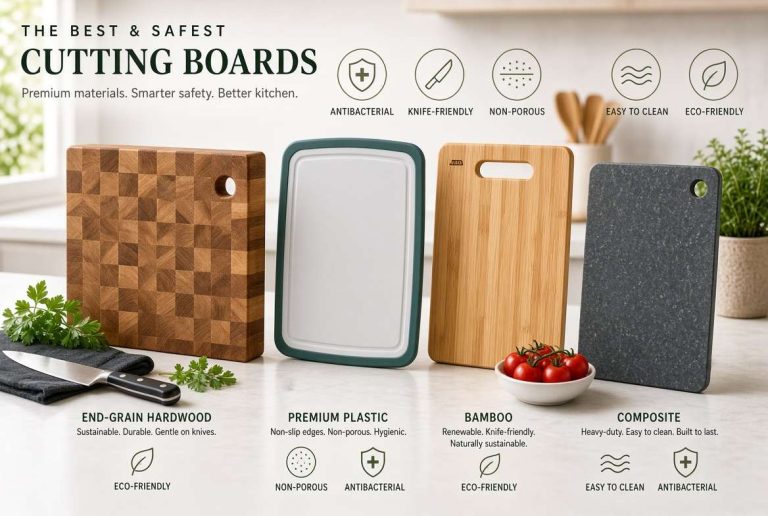
Plastic. Plastic is cheap, light, non-porous, and gentle on knives. It can go in the dishwasher. The downside is that it scars and needs replacing. For most home cooks, it is the safest all-round material for raw meat.
Bamboo. Bamboo looks good, feels solid, and is easy on knives. It needs hand washing and oiling. It works well for carving and serving. It needs more care to stay sanitary.
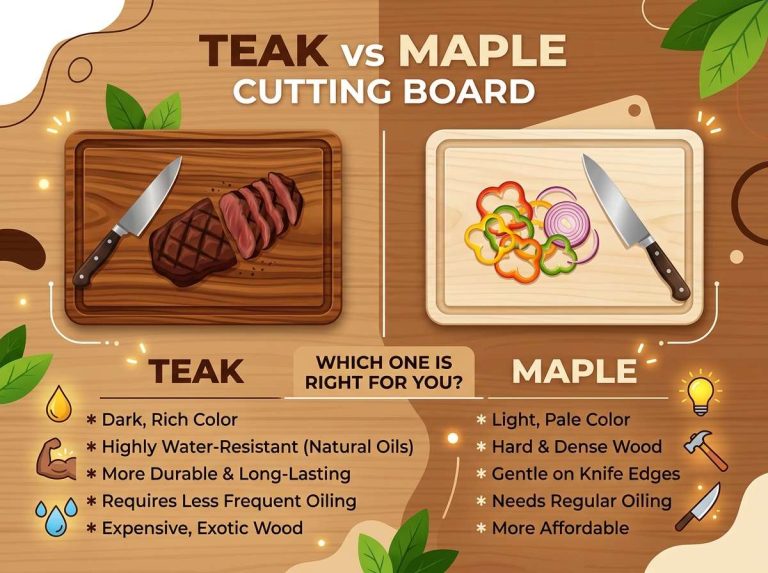
Wood. Hardwood boards, like maple, are durable and gentle on knives. Many cooks love them. They need oiling and hand washing too. Wood has some natural properties that can help limit bacteria, but it still needs good cleaning habits.
Stainless steel and titanium. Metal boards are non-porous and very easy to clean. They are hard on knife edges and can be loud. They work best as dedicated raw-meat boards.
Look for a Juice Groove
A juice groove, also called a juice well or moat, runs around the edge of the board. It catches liquid from steaks, roasts, and poultry. A deeper groove holds more juice. If you carve big cuts, this feature is a must. For simple prep, a shallow groove is fine.
Pay Attention to Size
Bigger boards give you more room, but they are harder to wash and store. A board around 15 to 18 inches suits most home kitchens. If you cook large roasts, go larger. If you have a small sink, go smaller.
Check Thickness and Stability
A thin board can slide or flex. A thicker board feels more solid, but it is heavier. Non-slip edges or feet help a lot. If your board has none, place a damp cloth or a thin mat underneath.
Think About Cleaning
Be honest about how you clean. If you want to toss everything in the dishwasher, plastic is your best bet. If you do not mind hand washing, bamboo and wood are fine. If you want fast rinsing, metal works well.
Use More Than One Board
This tip may save you the most trouble. Food safety experts often suggest at least two boards: one for raw meat, poultry, and seafood, and one for ready-to-eat foods like vegetables, fruit, and bread. A multi-piece set makes this easy.
Watch the Price
Do not overspend. A cheap, clean board is better than an expensive, dirty one. Think about how often you cook meat, how much space you have, and how much care you want to give.
Who Should Buy Which Board?
Beginners and busy families. The GORILLA GRIP set is the easiest choice. It is cheap, simple, and safe, and it comes in three sizes.
Hygiene-focused cooks. The titanium board or the stainless steel board suits you. Both have non-porous surfaces and rinse clean fast. Use them for raw meat and keep your knives honed.
Cooks who love big cuts and BBQ. The Empune extra large bamboo board gives you room to trim and slice big pieces of meat.
Hosts and entertainers. The ROYAL CRAFT WOOD set looks good and works for both prep and serving. The deep groove and handles make carving at the table easy.
Knife lovers. Pick plastic or bamboo to protect your edges. Use a metal board only if you accept the wear.
People with small kitchens. The slim titanium or stainless boards store easily. A small plastic board from the GORILLA GRIP set also works.
Common Mistakes to Avoid When Using a Meat Cutting Board
Even the best cutting board for meat can cause trouble if you use it the wrong way. Here are the most common mistakes.
Using one board for everything. Cutting raw chicken and then slicing salad on the same board is a classic mistake. Bacteria can spread. Use separate boards or wash the board well in between.
Skipping the wash step. A quick wipe does not clean a board after raw meat. Use hot water and soap, and scrub the whole surface, including the groove.
Putting bamboo or wood in the dishwasher. Heat and long soaking can crack and warp these boards. Wash them by hand.
Soaking boards in the sink. Water can seep in and damage bamboo and wood. It can also leave a damp spot for bacteria.
Ignoring deep scars. Plastic boards with deep cuts are hard to clean. If your board is badly scarred, replace it.
Forgetting to oil bamboo. Dry bamboo can crack. A little food-safe mineral oil every few weeks keeps it in shape.
Washing raw meat before cutting. Rinsing raw chicken in the sink can splash bacteria around your kitchen. Pat it dry with paper towels instead.
Using a slippery board. If the board slides, you can cut yourself. Use non-slip edges or a damp cloth underneath.
Chopping hard with the wrong board. Metal boards do not handle heavy chopping well. Plastic scars quickly under a cleaver. Match the board to the job.
Simple Care Tips to Keep Your Board Safe and Long-Lasting
A little care goes a long way. Follow these easy steps.
- Wash the board right after use with hot water and dish soap.
- Scrub the groove and edges, where juice collects.
- Rinse well and dry with a clean towel.
- Let the board air dry standing up so air reaches both sides.
- For bamboo and wood, rub in a thin layer of food-safe mineral oil every few weeks.
- For deep cleaning, you can wipe the board with a mix of water and a little white vinegar, and then rinse. This also helps with smells.
- Replace plastic boards when they get deep cuts that you cannot scrub clean.
Frequently Asked Questions
What is the best material for a meat cutting board?
There is no single answer. Plastic is the easiest to clean and the cheapest. Bamboo and wood feel better under the knife and look nicer, but they need more care. Metal boards are very easy to sanitize but hard on knives. For most home cooks, a plastic board for raw meat and a bamboo or wood board for everything else is a smart mix.
Is a bamboo cutting board safe for raw meat?
Yes, if you clean it well. Wash it with hot, soapy water right after use and dry it fully. Avoid leaving it wet. If you cut raw poultry often, you may prefer a non-porous board for that job.
Are metal cutting boards bad for knives?
They are harder on knives than wood, bamboo, or plastic. A very sharp edge can dull faster. If you use a metal board, hone your knife often and avoid heavy chopping.
How often should I replace a cutting board?
Replace a board when it has deep grooves you cannot clean, when it warps and no longer sits flat, or when it cracks. Plastic boards usually wear out faster than bamboo or wood.
Do I need a juice groove?
If you carve roasts, slice steaks, or cut juicy meat, yes. A groove keeps the counter clean. For simple chopping, you can skip it.
Can I put these boards in the dishwasher?
It depends on the material. Many plastic boards, including the GORILLA GRIP set, are made to go in the dishwasher. Bamboo boards should be washed by hand. Check the listing for metal boards.
Final Verdict: Which Is the Best Cutting Board for Meat?
After comparing all five boards, a few clear winners stand out for different needs.
Best overall for most people: GORILLA GRIP Cutting Board Set of 3. It is cheap, simple, easy to clean, and safe. You get three sizes, a juice groove, and slip-resistant edges. It is the easiest way to keep raw meat separate from other foods.
Best for carving and serving: ROYAL CRAFT WOOD Bamboo Set. The deep groove, side handles, and nice look make it perfect for roasts, steaks, and hosting. Just follow the care steps.
Best for big cuts: Empune Extra Large Bamboo Board. If you cook whole chickens, roasts, or ribs, the large surface gives you room to work without a mess.
Best for hygiene-focused prep: Titanium Cutting Board. The non-porous metal side and the PP side give you a clean, tidy way to handle raw proteins. Keep your knives honed.
Best low-fuss metal option: SNOWCLAD Stainless Steel Board. It works well as a dedicated raw-meat board that cleans up in seconds.
If you are not sure where to start, buy the GORILLA GRIP set for daily raw meat prep and add one bamboo board for carving and serving. That small combination covers almost every meat job in a home kitchen, keeps your food safe, and protects your knives.
A good board will not make you a better cook overnight, but it makes the work cleaner, safer, and a lot more pleasant. Pick the one that matches how you cook, care for it well, and it will serve you for a long time.

Mary is a home cooking enthusiast and kitchen gear reviewer with a passion for practical cookware and food preparation tools. She enjoys testing cutting boards, knives, kitchen gadgets, and other cooking essentials to help home chefs make smarter buying decisions. Through KitchenCutting.com, Mary shares honest product reviews, buying guides, and helpful kitchen tips to make cooking easier, safer, and more enjoyable.
2 Comments