How to Fix a Warped Cutting Board?
Your cutting board is warped. You’ve noticed it sits funny on the counter. One corner lifts up. The knife doesn’t glide smoothly. It’s frustrating, right?
In this article
A warped cutting board is one of the most common kitchen problems. The good news? You don’t have to throw it away. Most warped boards can be fixed with simple methods you can do at home. Some methods take just a few hours. Others need a bit more patience. All of them are worth trying before you buy a new board.
This guide walks you through every method to straighten a warped cutting board. You’ll learn why boards warp in the first place. You’ll discover the fastest fixes and the ones that work best for different materials. By the end, you’ll know exactly how to save your favorite cutting surface.
Why Do Cutting Boards Get Warped?
Before you fix a warped board, it helps to know what caused the problem. Understanding the cause prevents future warping.
Water Is the Main Culprit
Water causes most cutting board warping. Wooden boards absorb water like sponges. When wood absorbs moisture, the fibers swell. But wood doesn’t swell evenly. Some parts of the board get wetter than others. This uneven swelling creates curves and bends.
The bottom of your board stays dry when it sits on a counter. The top gets wet from washing or food prep. This moisture difference causes the wood to warp upward or downward.
Heat Causes Problems Too
Heat is another major warping cause. Temperature changes force wood to expand and contract. A hot board pulled from the dishwasher can warp when it hits cold air. A board left in the sun gets too hot. Wood fibers react to heat by changing size.
Heat can also come from your stovetop. Never place a cutting board directly on a hot surface. The intense heat damages the wood fibers and creates permanent warping.
Humidity in Your Kitchen
The air around your cutting board matters more than you think. Humidity levels change throughout the day and seasons. High humidity makes wood absorb more moisture. Low humidity makes wood dry out faster.
When humidity keeps changing, your board keeps expanding and contracting. This constant movement weakens the wood. Over time, the board stays in a warped position.
Storage and Support Issues
How you store your cutting board affects whether it warps. A board stored standing upright against a wall might bend. A board left in a damp cabinet absorbs moisture from the air. A board stacked under heavy items gets pressure points that warp the surface.
The best storage keeps your board flat in a dry space. Air can flow around it. Nothing presses down on one spot. The board stays straight.
Material Types Warp Differently
Not all cutting boards warp the same way. Bamboo boards warp more easily than hardwood boards. Thin boards warp faster than thick ones. Boards made from cheaper wood warp quicker than boards made from quality wood.
Plastic and rubber boards rarely warp. They’re more stable in humid kitchens. But plastic can crack and degrade over time. Wood boards need more care but last longer when you treat them right.
Quick Fix: The Weight Method
The simplest fix for a slightly warped board uses nothing but weights. This method takes time but requires zero skill.
What You Need
- Your warped cutting board
- Heavy flat objects (books, weights, boards, anything flat and heavy)
- A flat, clean surface
- Time (at least 24 hours, better after 48 hours)
Step-by-Step Instructions
Start by finding the warp direction. Look at your board from the side. Is the edge curled up? Does the middle sag down? The board probably bends one way more than the other.
Place your cutting board flat on a clean, dry surface. Make sure the surface is completely level. A kitchen counter or table works great. Avoid damp areas like near the sink.
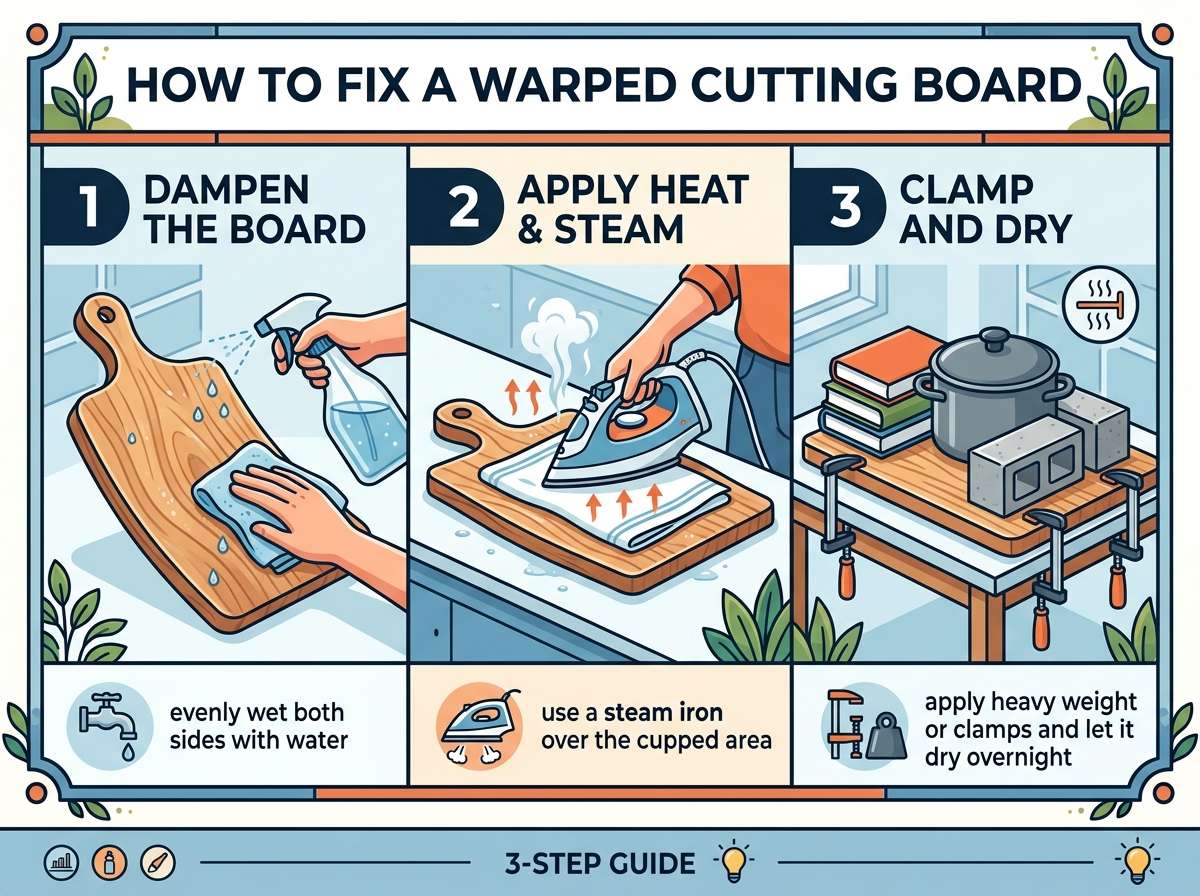
Lay heavy objects directly on top of the warped board. Use books, dumbbells, tiles, or cinder blocks. Spread the weight evenly across the surface. Don’t concentrate all the weight in the middle. You want pressure across the whole board.
Leave the weights in place for at least 24 hours. Longer is better. If possible, leave them for 48 to 72 hours. The wood needs time to relax and adjust.
After the time passes, remove the weights slowly. Check if the board is flatter. If it still warps, repeat the process. Some boards need multiple rounds of weighted pressing.
Why This Works
Wood has memory. When pressure keeps the board flat, the fibers slowly remember that flat shape. The longer the wood stays under pressure, the more likely it will hold the straight form.
This method works best on boards that are only slightly warped. If your board curves dramatically, this alone might not fully fix it. But it’s a great starting point.
The Water Soaking Method
Water seems like the enemy of cutting boards, but controlled water exposure can actually fix warping. This method works especially well on dry, shrunken boards that have curled up.
How to Soak Your Cutting Board
Fill a bathtub or large container with cool water. The water should be room temperature, not hot or cold. Never use hot water for this method. Hot water causes wood to warp worse, not better.
Submerge your entire cutting board in the water. Yes, the whole thing. Let it soak for several hours. Some people soak boards overnight. The longer you soak, the more the wood absorbs moisture.
After soaking, remove the board and let it drip dry. Don’t wring it out or press it. Just let gravity work. Place the board flat on a level surface to dry completely. This drying process takes 24 to 48 hours.
As the board dries slowly, the fibers contract evenly. This even contraction helps the board dry flat instead of warped.
When to Use This Method
Use the soaking method when your board is severely shrunken and curved. Use it when the weight method alone hasn’t worked. Use it on boards that are very dry from heat damage.
Don’t use this method on boards with thick finishes or paint. Don’t use it on boards that are already water-stained. Don’t soak plastic boards. This method is for solid wood boards only.
Combining Soaking with Weights
For stubborn warping, combine soaking with weights. Soak the board for several hours. Then place it flat with heavy weights on top. Let it dry under pressure. This one-two approach fixes many impossible-looking warps.
The Heat and Pressure Method
Heat helps relax wood fibers. Combined with pressure, heat can straighten a badly warped board. This method requires careful attention to avoid overheating.
Using Your Oven
Preheat your oven to the lowest possible setting. Most ovens go down to 150 to 170 degrees. This is much lower than cooking temperature.
Let your oven reach the target temperature. Place your cutting board on the oven rack. Keep the door partially open so you can monitor the process. You don’t want the board to get too hot.
Leave the board in the warm oven for 10 to 15 minutes. Your goal is to warm the wood, not cook it. Pull the board out and immediately place it flat under heavy weights.
The heat makes the wood fibers flexible. The weight holds the board straight while the wood cools. As it cools, the fibers lock into the straight shape.
Using Steam
Another heat method uses steam. Dampen a towel with hot water. Don’t make it soaking wet. Just damp. Lay it across the warped area of your board.
Cover everything with plastic wrap or a plastic bag. The plastic traps the steam heat against the wood. Leave it for 15 to 20 minutes.
Remove the plastic and towel. Wipe away any moisture. Place the board flat under weights to cool and dry.
Steam is gentler than an oven. Use this method if you’re nervous about oven heat.
Safety Notes for Heat Methods
Never put a cutting board in a regular oven at cooking temperature. You’ll damage or burn the board. Low heat is the key to success.
Never leave a board unattended in an oven. Always keep an eye on it. Never let the board touch the oven walls. Place it on a rack in the center.
If your board has any plastic parts, handles, or stains, check them before using heat. Some materials melt or discolor under heat.
The Moisture Balance Method
Sometimes boards warp because they lost too much moisture. This method slowly brings moisture back into the wood.
How to Rebalance Moisture
Place your cutting board in a moderately humid area of your home. A bathroom or kitchen away from heat sources works well. The board needs to absorb moisture from the air.
This process takes days or even weeks. Your patience will be rewarded. The slower the moisture returns, the less likely the board will warp again during drying.
Check the board regularly. As it absorbs moisture, it should start to flatten out. The fibers swell slowly and evenly. This even swelling brings the board back to its original shape.
Once the board is flat, store it in a climate-controlled space. Avoid areas with big temperature or humidity swings. Your board will hold its shape better when conditions stay steady.
Using a Humidifier
If your kitchen is very dry, use a small humidifier in the storage area. Keep humidity levels between 40 and 55 percent. This range keeps cutting boards happy.
Dry climates (below 30 percent humidity) make boards shrink and warp. Humid climates (above 70 percent humidity) encourage mold growth. Middle-ground humidity is the sweet spot.
The Clamp and Block Method
For serious warping, clamps and wooden blocks provide powerful correction. This method uses leverage to straighten even badly curved boards.
What You’ll Need
- C-clamps or bar clamps (at least two)
- Wooden blocks or thick boards
- A workbench or sturdy table
- Clean towels or cloth
Step-by-Step Process
Place your cutting board on a flat work surface. If it has a strong curve, identify the direction of the warp. You’ll be applying force in the opposite direction.
Position wooden blocks under the board. The blocks should be on either side of the highest point of the warp. For example, if the middle sags down, put blocks at both ends to lift them up.
Place the board on top of the blocks. Use C-clamps to hold the board firmly to the blocks. Don’t over-tighten the clamps. You want steady pressure, not crushing force.
Leave the clamps in place for 24 to 48 hours. The board will slowly straighten as the wood fibers adjust. Check progress after 24 hours. If it’s not flat yet, leave it longer.
Using Cauls for Curved Corrections
For curved warping, use curved cauls (helper pieces). A caul is just a piece of wood that matches the curve shape. You press the warped board flat against the caul using clamps.
This method literally forces the board into the right shape. As it stays pressed, the wood remembers this flat form.
Prevention: Stop Future Warping
Once you’ve fixed your cutting board, keep it straight. Prevention is much easier than fixing.
Proper Washing Techniques
Wash your cutting board right after use. Quick washing prevents stains and damage. But dry it immediately afterward. Don’t let it drip dry on a rack.
Use a soft cloth to dry both sides. Pay special attention to the edges. Water trapped at the edges causes curling. Make sure the board is completely dry before storing it.
Never soak your cutting board. Never leave it in standing water. Never put it in the dishwasher unless the manufacturer says it’s safe. Hand washing gives you control.
Smart Storage Solutions
Store your cutting board flat, not upright. Lay it on a shelf with nothing on top of it. Make sure air can flow around all sides. Don’t stack heavy items on the board.
Store in a climate-controlled space. Avoid the cabinet right above the stove. Avoid cabinets next to windows. Choose a spot with steady temperature and humidity.
Some people use a cutting board rack or stand. These keep boards organized and visible. They also keep air flowing around the boards, which prevents moisture buildup.
Humidity Control
Keep your kitchen humidity moderate. Use a dehumidifier if your kitchen stays very humid. Use a humidifier if your kitchen is very dry. Aim for 45 to 55 percent humidity.
In winter, heating systems dry out the air. A humidifier helps your board stay stable. In summer or tropical climates, dehumidifiers prevent moisture damage.
Seasoning Your Wood Board
Oil your wooden cutting board once a month. Food-safe mineral oil works great. So does beeswax mixed with mineral oil.
Apply the oil with a soft cloth. Rub it in the direction of the wood grain. Let it soak in for several minutes. Wipe away the excess.
Oiling does two things. It protects the wood from moisture. It also keeps the wood fibers flexible and happy. Well-oiled boards are less likely to crack or warp.
When to Replace Instead of Fix
Some cutting boards are too far gone to save. Knowing when to give up saves you time and money.
Signs Your Board Is Unsalvageable
If your board has deep cracks running through it, fixing the warp won’t help. Cracks will get worse and trap bacteria.
If your board has mold or mildew that won’t come off, replacement is safer. Mold damages the wood structure. It can spread to your food.
If your board has separated layers or splintering that’s spreading, it’s unsafe. Splinters in your food are a real hazard.
If you’ve tried multiple methods and nothing worked, the damage might be permanent. Some warping is just too severe.
Choosing a New Cutting Board
If replacement is needed, choose wisely this time. Thicker boards warp less than thin ones. Hardwoods warp less than soft woods. Bamboo and plastic are both warp-resistant but for different reasons.
Buy from reputable manufacturers. Quality boards last for years with proper care. Cheap boards warp quickly and frustrate you.
Get the right size and style for your cooking. If you do lots of chopping, get a bigger board. If you do fine dicing, get a board with a flat, stable surface.
Final Thoughts: Your Board Can Be Saved
A warped cutting board is annoying but not the end. Most warping can be fixed with methods you can do right at home. No special tools. No expensive products. Just patience and some basic techniques.
Start with the simplest method. If that doesn’t work, try the next one. Most boards respond to the weight method or the soaking method. More stubborn warping needs heat, clamps, or combination approaches.
Once your board is flat again, use the prevention tips. Proper washing, smart storage, humidity control, and regular oiling keep boards straight for years.
Your favorite cutting board has served you well. It’s earned a second chance. Give it one of these methods, and you’ll be chopping and dicing on a flat, stable surface once again. Save your board. Save your money. Keep cooking.
Remember: Every cutting board can be saved with the right approach. Don’t throw away a warped board until you’ve tried these proven methods. Most kitchens have everything needed to straighten a board. Your board is worth the effort.

Mary is a home cooking enthusiast and kitchen gear reviewer with a passion for practical cookware and food preparation tools. She enjoys testing cutting boards, knives, kitchen gadgets, and other cooking essentials to help home chefs make smarter buying decisions. Through KitchenCutting.com, Mary shares honest product reviews, buying guides, and helpful kitchen tips to make cooking easier, safer, and more enjoyable.