How Often Should You Oil a Cutting Board?
Your cutting board works hard every single day. It sits there ready to help you slice, dice, and chop your way through meal prep. But here’s the thing: most people never think about what keeps it healthy and strong. The answer is simple. You need to oil it regularly.
In this article
Oiling your cutting board isn’t some fancy kitchen secret. It’s just basic maintenance that keeps your board looking good and lasting for years. Think of it like brushing your teeth. You wouldn’t brush once and hope your teeth stay clean forever, right? The same goes for your cutting board.
In this guide, I’m going to walk you through everything you need to know about oiling cutting boards. You’ll learn how often you should do it, what oils work best, and why this simple habit matters so much.
Why Your Cutting Board Needs Oil
Before we talk about how often to oil your board, let’s cover why this matters in the first place.
Your cutting board is made of wood (or maybe bamboo). Both materials are porous. This means they have tiny holes and spaces all through them. When you use your board every day, water soaks into these holes. Your board gets wet from washing. It gets wet from the foods you chop on it. All this moisture builds up inside the wood.
When wood stays wet for too long, bad things happen. The wood can warp. It can crack. It can even start to rot. Worse, moisture creates the perfect home for bacteria and mold to grow. That’s not something you want anywhere near your food.
This is where oil comes in. When you rub oil into your board, it fills those tiny pores. Oil creates a barrier that keeps water out. Your board stays sealed and protected. The wood stays strong, straight, and safe.
Oil also keeps your board from drying out too much. If you never oil your board, it can become brittle and split. Oil keeps the wood flexible and healthy. It’s the sweet spot between too wet and too dry.
How Often Should You Oil Your Cutting Board?
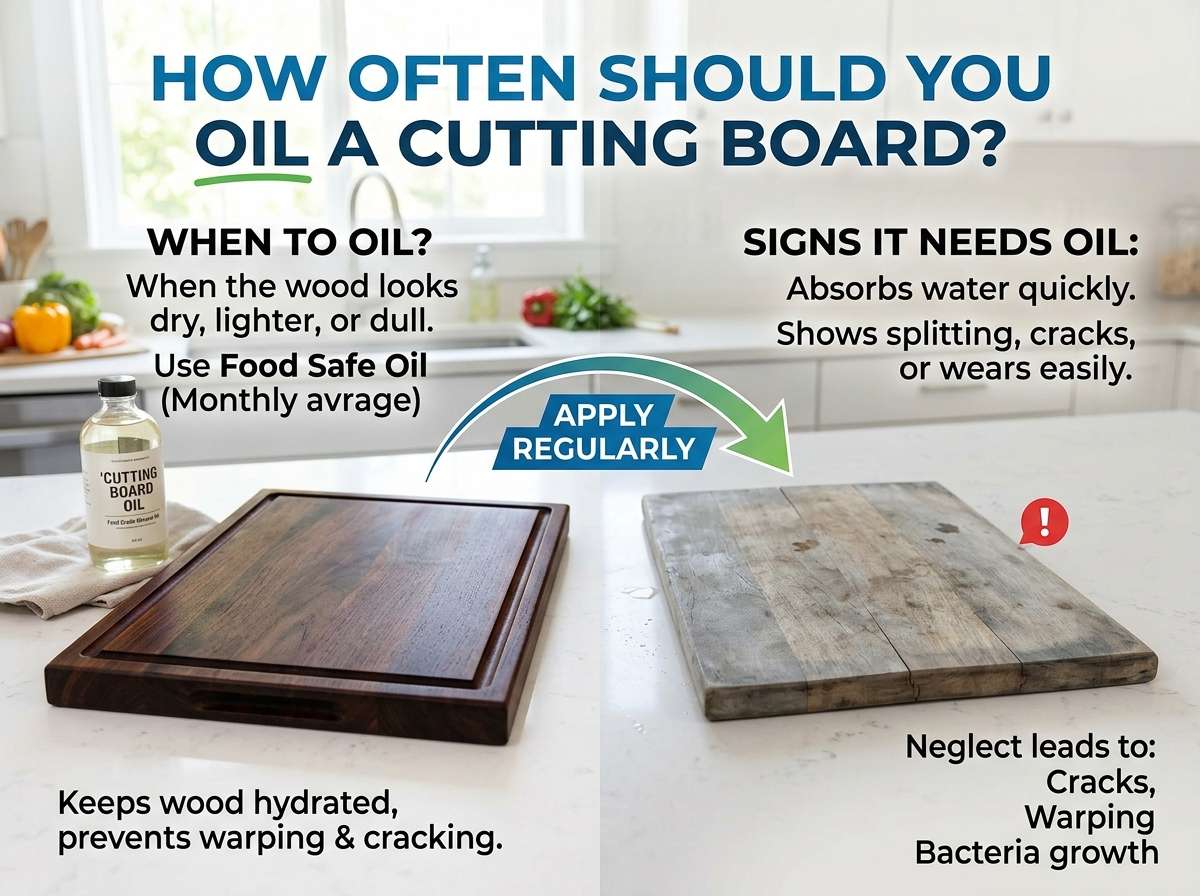
The simple answer is: every week if you use it daily. If you don’t use your board every day, oil it once a month.
But let me break this down a bit more because every kitchen is different.
Daily Users
If you use your cutting board every single day, you should oil it weekly. That might sound like a lot, but it really isn’t. The process takes about five minutes. You can do it while you’re catching up on your phone or listening to music.
Weekly oiling keeps your board in top shape when it’s working hard. All that daily washing and chopping is tough on wood. Regular oil keeps it protected.
Moderate Users
Do you use your board maybe three or four times a week? In that case, oil it every two weeks. You’re still using it enough that it needs protection, but not so constantly that it needs weekly treatments.
Light Users
If you only reach for your board once a week or less, monthly oiling is plenty. Your board isn’t facing as much stress, so it doesn’t need as frequent treatment.
Seasonal Storage
Here’s something many people don’t think about. If you have a cutting board that you store away seasonally, oil it before you pack it up. Oil it again when you bring it back out. Storage can be hard on wood because humidity levels change. A good oil coating protects it during these times.
Signs Your Cutting Board Needs Oil Right Now
You don’t have to follow a strict schedule if you pay attention to your board. Your board will actually tell you when it needs oil.
Look at the surface of your board. Does it look pale or grayish? Fresh wood has a rich color. When it gets pale, that’s a sign moisture is affecting it. Oil will bring that color back fast.
Feel your board with your hand. Does it feel dry and rough? Run your fingers across it. If it feels like you might get splinters, that’s a big sign it needs oil. Oil will make it smooth again.
Does your board feel sticky or slimy even after washing? That usually means water is getting trapped inside. Oil will seal it back up.
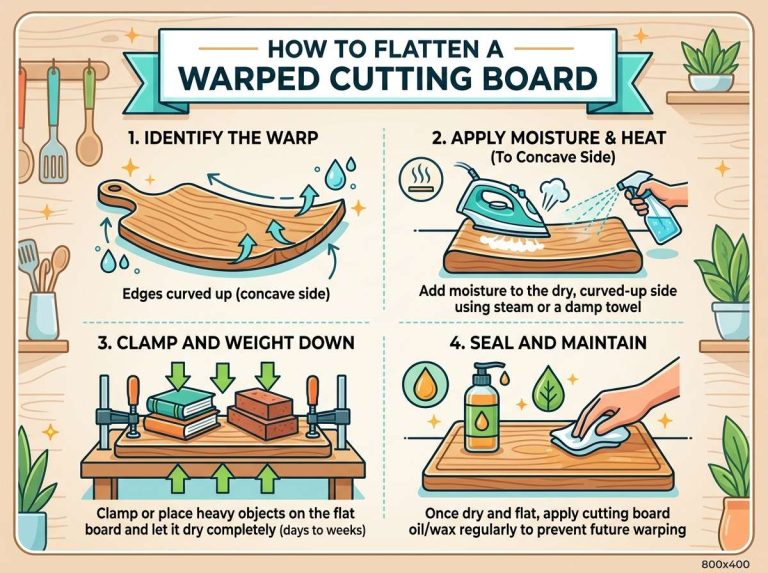
Look for any visible cracks or warping. These are the worst signs. Your board is already in trouble. Oil it immediately and be more aggressive with your oiling schedule going forward.
The Best Oils for Your Cutting Board
Not all oils work the same way on cutting boards. You need oils that are food-safe and won’t go rancid.
Mineral Oil
Mineral oil is the most popular choice for cutting boards. It’s cheap, it works great, and it’s totally safe for food. Mineral oil comes from petroleum. Now that might sound scary, but food-grade mineral oil is refined and purified. It doesn’t have any harmful chemicals left in it.
The best part about mineral oil? It doesn’t go bad. It won’t go rancid like regular cooking oils do. It just sits there protecting your board. You can find mineral oil at any drugstore or supermarket. It’s usually very cheap.
Beeswax
Many people like to use mineral oil mixed with beeswax. Beeswax is natural and adds an extra protective layer. When you combine mineral oil with beeswax, you get a harder finish that lasts longer. Some people swear by this combo.
You can buy cutting board oils that already mix mineral oil and beeswax together. You can also make your own blend at home. Just rub mineral oil into your board first, then rub beeswax on top while it’s still wet. The beeswax melts and mixes with the oil.
Coconut Oil
Coconut oil is food-safe and smells great. But here’s the problem: it can go rancid. If you use coconut oil, your board might start to smell weird after a few weeks. That rancid smell gets into the wood. It’s hard to get rid of.
Some people use refined coconut oil because it has less smell, but even that can turn rancid eventually. You’d have to oil your board very frequently to keep it fresh. It’s more work than it’s worth.
Avocado Oil and Other Cooking Oils
All cooking oils can go rancid. We’re talking about olive oil, avocado oil, vegetable oil, and anything else you cook with. Yes, they’re food-safe. But they’ll spoil inside the wood of your board. That creates bacteria growth and weird smells.
Don’t use your regular cooking oils on your board. Save those for cooking.
Walnut Oil
Some people recommend walnut oil because it’s natural. But walnut oil goes rancid faster than most oils. It also leaves a sticky residue if you use too much. Stick with mineral oil instead.
How to Oil Your Cutting Board the Right Way
Now that you know which oil to use and how often to do it, let me show you the actual process. It’s really simple.
What You’ll Need
Get your cutting board, your oil, and a clean cloth. That’s it. You need three things. No special equipment required.
Step One: Clean Your Board First
Start with a clean, dry board. Wash it with hot soapy water and dry it completely. You don’t want to trap dirty water inside when you oil it. Let your board sit for a few minutes after drying to make sure it’s completely dry.
Step Two: Apply the Oil
Pour a small amount of oil onto a clean cloth. You need just enough to coat the cloth. You’re not going to pour oil directly on the board. That wastes oil and causes drips.
Rub the cloth all over your board. Get the top surface first. Really rub it in. Then flip your board and do the bottom. Don’t forget the edges and sides. Water can get in from anywhere.
Step Three: Let It Soak
Now comes the easy part. Just let your board sit. Let the oil soak into the wood. This takes about thirty minutes to an hour. Some people like to oil their board before bed and let it sit overnight. That works great.
Step Four: Wipe Off Extra Oil
After your board has soaked, take a clean, dry cloth and wipe off any extra oil that’s sitting on top. You don’t want a slippery board. Just remove the excess. Some oil should stay on the surface, but not so much that it’s wet to the touch.
That’s it. You’re done. Your board is now protected and ready to work.
Oil Your Board Between Uses Too
Here’s a pro tip: you can oil your board even more frequently if you want. Some professional chefs oil their boards every single day. They might do it before they start cooking or after they finish.
More oiling never hurts. It just means more protection. If you want your board to look amazing and stay in perfect condition, oil it more often. If you want the bare minimum, stick to the schedule I mentioned earlier.
You could also keep a small bottle of mineral oil near your sink. After you wash your board, give it a quick rub with oil on a cloth. This keeps it in constant good shape. It takes thirty seconds.
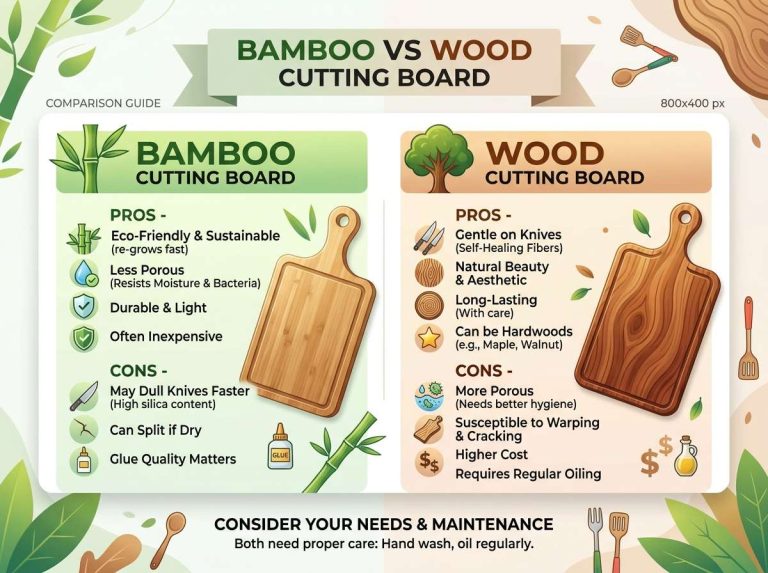
Wood vs. Bamboo: Are There Differences?
Both wood and bamboo cutting boards need oil. But there are some small differences.
Bamboo is actually harder than most wood. It’s denser. This means bamboo boards don’t soak up oil as fast. You might need to let the oil soak longer on a bamboo board, maybe two hours instead of one.
Bamboo also tends to dry out faster than wood boards. Many bamboo board owners oil their boards more frequently than weekly. Some do it twice a week. Pay attention to how your bamboo board looks and feels. Let that guide you.
Both materials get warped and cracked by moisture. Both benefit from regular oil. Both last longer when you treat them well. The basic oiling process is the same.
What About Plastic Cutting Boards?
Plastic boards don’t need oil. Seriously. Don’t do it. Plastic doesn’t absorb water the way wood does. Oil just sits on top and makes it slippery and weird.
Plastic boards are easy. Just wash them normally and let them dry. That’s all the maintenance they need.
Some people prefer plastic because it requires less care. Others prefer wood because it’s better for your knife blades and feels nicer to work with. Both are valid choices. Just remember that wood boards need that regular oiling.
Common Mistakes People Make
Let me talk about the mistakes you want to avoid.
Mistake One: Using Too Much Oil
More oil is not better. When you use too much oil, your board stays wet and slippery. It becomes hard to work on. The excess oil can also go rancid if you don’t wipe it off. Use just enough to coat your board. That’s plenty.
Mistake Two: Forgetting About the Edges and Sides
The edges and sides of your board need oil just as much as the top. Water can seep in from anywhere. Don’t skimp on these areas. Get oil on every part of your board.
Mistake Three: Oiling a Wet Board
Your board needs to be completely dry before you oil it. Oiling a damp board traps moisture inside. That defeats the whole purpose. Always dry your board first.
Mistake Four: Using the Wrong Oil
I already mentioned this, but it’s so important. Don’t use cooking oils. Don’t use olive oil. Don’t use fancy gourmet oils. Stick with food-grade mineral oil. It’s cheap and it works. Everything else either goes rancid or isn’t food-safe.
Mistake Five: Ignoring Your Board Until It’s Ruined
The worst mistake is waiting too long to start oiling. If you neglect your board for months and months, it can get permanently damaged. Don’t let it get to that point. Start oiling now, even if your board is old. It’s never too late to start caring for it properly.
Deep Cleaning Your Board Before Oiling
Once a month, you might want to do a deeper clean before oiling. This removes bacteria and keeps everything fresh.
Mix equal parts white vinegar and water. Use a cloth to wipe down your entire board with this mixture. Let it dry completely. Then oil your board as normal.
Some people like to sprinkle salt and lemon on their board. Rub it with half a lemon. The salt acts like a scrub and the lemon smell is amazing. Rinse well and dry before oiling.
You could also use baking soda mixed with a little water to make a paste. Scrub your board with this paste. Rinse and dry completely. Then oil it.
These deep cleans happen maybe once a month. Your regular weekly or bi-weekly oiling is the main thing that keeps your board healthy.
How to Know When Your Board Is Beyond Saving
Sometimes a cutting board gets so damaged that oiling can’t fix it. It’s sad, but it happens.
If your board has deep cracks that go all the way through, it might be time to get a new one. Cracks that go all the way through can’t be sealed with oil alone. They trap bacteria inside where you can’t reach it.
If your board has warped so badly that you can’t set it flat on your counter, it’s probably done. A little warping can happen and still be safe. But if it looks like a potato chip, it’s time for a new board.
If your board has mold or mildew that you can’t clean off, don’t use it anymore. Mold is dangerous. A little surface mold can be cleaned with vinegar, but deep mold growth means the board is compromised.
If your board smells bad and nothing gets rid of the smell, it might be time to let it go. A smell that won’t go away means something is growing inside the wood.
Storing Your Cutting Board Properly
When you’re not using your board, store it somewhere dry. Stand it up on its side instead of laying it flat. This allows air to flow around it. It prevents moisture from collecting on the bottom.
Keep it away from your sink if you can. Humidity near the sink can affect wood even when your board is dry. A cabinet or shelf away from water is ideal.
Don’t store your board in a damp basement or garage. Temperature and humidity changes in these places are hard on wood. Keep it somewhere with stable conditions.
If you live somewhere humid, you might need to oil your board more often. Humidity pulls moisture into the wood. More oil helps protect against this.
The Bottom Line on Oiling Cutting Boards
Oiling your cutting board is one of the easiest ways to make it last for years and years. Weekly oiling for daily users. Every two weeks for moderate users. Once a month for light users. That’s the basic schedule.
Use food-grade mineral oil. It’s cheap, safe, and it works. Follow the simple four-step process. Clean, apply, soak, and wipe. You’ll have a healthy, beautiful board.
Pay attention to your board. It will tell you when it needs attention. When it starts to look pale or feel dry and rough, it’s time to oil. Don’t wait until it’s damaged.
This simple habit keeps your board safe and hygienic. It keeps your food preparation area clean. It keeps your board looking nice. And it keeps your board working hard for years to come.
Start oiling your board today. You’ll be amazed at how much better it looks and feels. Your future self will thank you for taking care of your tools. Good kitchen habits start with the basics, and oiling your cutting board is one of the most basic and important ones you can do.
Final Thoughts
Your cutting board is an investment. Treat it right, and it will serve you well. Treat it poorly, and you’ll be replacing it constantly. The choice is simple.
Oiling takes five minutes. It costs almost nothing. The payoff is huge. You get a board that lasts for years. You get a board that stays safe and hygienic. You get a board that looks beautiful on your counter.
Start this week. Oil your board this weekend. Make it a habit. Every week or every two weeks, spend five minutes caring for your board. It’s one of the easiest things you can do to improve your kitchen and extend the life of your tools.
Your cutting board works hard for you. Now it’s time to work a little bit for it.

Mary is a home cooking enthusiast and kitchen gear reviewer with a passion for practical cookware and food preparation tools. She enjoys testing cutting boards, knives, kitchen gadgets, and other cooking essentials to help home chefs make smarter buying decisions. Through KitchenCutting.com, Mary shares honest product reviews, buying guides, and helpful kitchen tips to make cooking easier, safer, and more enjoyable.