Kitchen Scale Measurement Guide
A kitchen scale measurement guide can make cooking and baking feel far less uncertain. Many recipes depend on exact amounts, and a small error in flour or sugar can change the final result. Learning how a kitchen scale works is a simple way to measure with more confidence.
This guide explains what a kitchen scale does, how to read its display, and how to use the tare function. It also covers units, step-by-step weighing, common mistakes and how weight compares with cups and spoons. A short set of frequently asked questions closes the article.
Key Takeaways
- Weighing ingredients is usually more consistent than scooping them with cups.
- The tare function lets you subtract the weight of a container so you measure only the food.
- Grams are the most precise common unit for most home recipes.
- Zero the scale before each use and keep the platform free of overload.
- Check your scale now and then so readings stay reliable.
Why Accurate Kitchen Scale Measurements Matter
Recipes, especially baked goods, rely on balanced amounts of flour, liquid, sugar and fat. When one ingredient is off, texture and rise can change. Accurate measuring helps recipes turn out closer to what the writer intended.
Accuracy also helps when you want to repeat a recipe. If you weigh each ingredient the same way, the results are easier to compare. That makes it simpler to notice what you would like to adjust next time.
What to Look for When You Buy a Kitchen Scale
Start with the display. A clear screen that shows grams and ounces makes reading easier. Many buyers also look for a tare button, since it is used often.
Next, consider the platform size and capacity. A larger platform fits big bowls, while a smaller one can be easier to store. Check the stated maximum weight so you know the scale can handle your typical batches.
How to Measure Ingredients the Right Way
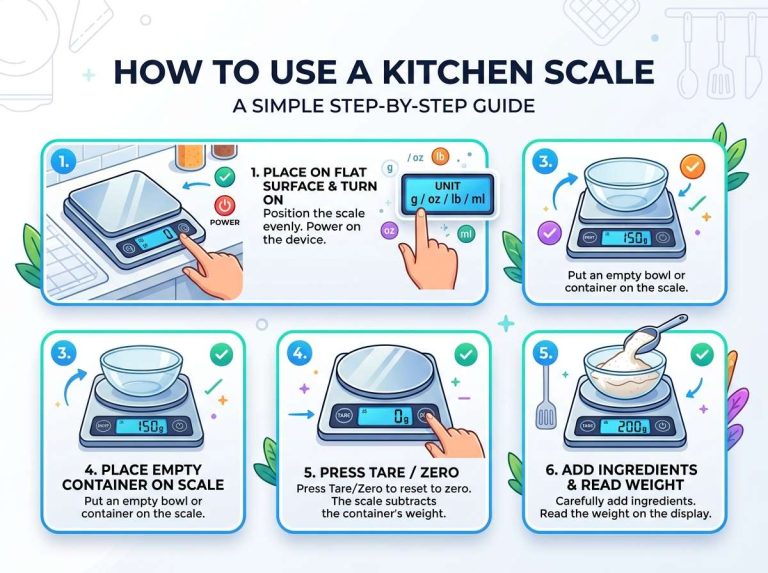
Place the scale on a flat, stable surface. Turn it on and wait for the reading to settle. Then add the container, tare, and weigh each ingredient in turn.
Work slowly as you add food. Stop when you reach the target amount, and avoid overshooting by a large margin.
What Is a Kitchen Scale and Why Use One?
A kitchen scale is a small device that measures how heavy food is. It shows the result on a digital or mechanical display. Most home cooks use digital models because they read quickly and are easy to understand.
People use kitchen scales to measure ingredients by weight rather than by volume. This approach gives a more consistent starting point for many recipes.
Weight Versus Volume: The Core Difference
Weight measures how heavy something is. Volume measures how much space it takes up. A cup of flour measured by volume can weigh more or less depending on how it was packed.
Weight stays the same no matter how loosely or tightly the ingredient is packed. That is why many bakers prefer weighing for dry goods.
Common Types of Kitchen Scales
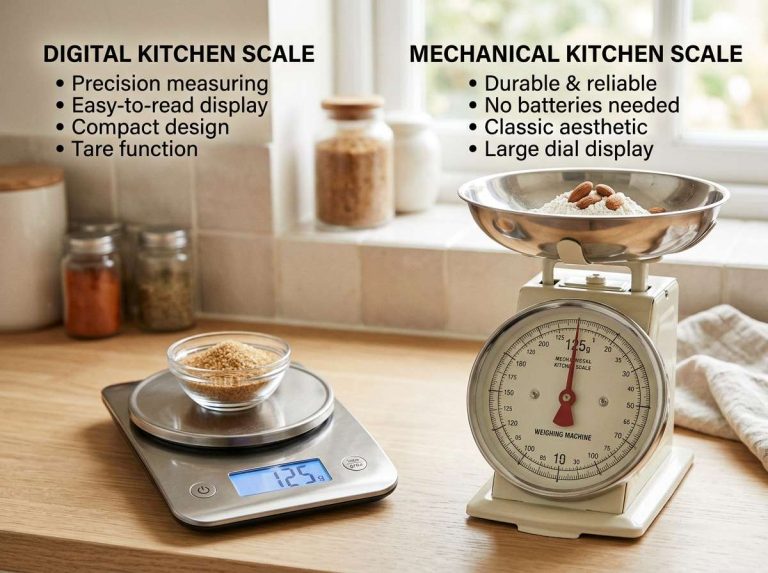
Digital scales are the most common type for home kitchens. They use electronic sensors and show numbers on a screen. Mechanical scales use a dial and springs, and they are less common today.
Some digital scales include extra features such as a built-in timer or a liquid mode. Basic models usually focus on weighing accurately without extra functions.
Everyday Uses Beyond Baking
A kitchen scale is useful far beyond the baking shelf. It can help portion meals, measure produce, or divide ground meat evenly. It is also handy for mixing sauces, dressings and marinades that call for precise amounts.
Kitchen Scale Basics for Beginners
Before using a scale, it helps to learn a few basic terms. These include the units it displays, what the buttons do, and how the tare function works. Once you know these basics, the rest of the process becomes much easier to follow.
Key Units: Grams, Ounces and Pounds
Grams are a metric unit of weight and are common in recipes from many countries. Ounces and pounds are used in the United States and some other places. Most digital scales let you switch between these units with a button.
Grams are smaller, so they show finer detail. For example, a few grams of salt or yeast can make a difference. Ounces are larger, so small amounts may be harder to read precisely.
Reading the Display and Zero Button
The display shows the current weight in the unit you have selected. Look for a small indicator that confirms the unit. Some scales also show a symbol when the reading is unstable.
The zero button resets the display to 0. Pressing it clears the reading so you can start a new measurement from a clean point. Many people press zero before every new ingredient.
Tare Function Explained
Tare means setting the scale to read zero while a container sits on it. The container’s weight is removed from the display. Only the food you add afterward is counted.
This feature saves time and reduces math. It is especially useful when you add several ingredients to one bowl. Each time, you tare first and then add the next item.
How a Kitchen Scale Measures Weight
A kitchen scale works by sensing pressure from the object on its platform. Inside, a sensor turns that pressure into an electrical signal. The scale then converts the signal into a number on the display.
The process happens in a fraction of a second. Because of this, the reading updates quickly as you add or remove food.
Load Cells and Digital Sensors
Most digital kitchen scales use a load cell. A load cell is a small metal part that bends slightly under weight. Thin strain gauges on the cell change their electrical resistance as it bends.
A circuit reads this change and calculates the weight. The display then shows the result. In practice, this design is compact and reliable for everyday kitchen use.
Why Scales Need Calibration
Calibration means checking and adjusting a scale so its readings match a known weight. Over time, sensors can drift, and small shifts may affect accuracy. Calibration helps keep readings reliable.
Many scales come with a calibration weight or a built-in calibration mode. The steps vary by model, so the instruction manual is the best guide. Some people also check a scale with a common object of known weight, such as a coin of standard size, as a rough test.
Step-by-Step: Measuring Ingredients Accurately
A simple routine helps you weigh ingredients with fewer errors. The steps below work for most digital scales. Following them in the same order each time builds a helpful habit.
Preparing Your Scale and Workspace
Place the scale on a level, hard surface. Uneven counters can throw off readings. Keep it away from drafts and from the edge of the counter.
Turn the scale on and wait for the display to show zero. If it does not, press the zero button. Then check that the unit is the one your recipe uses.
Using the Tare Button with Containers
Place your empty bowl or container on the platform. Press tare and wait for the display to read zero again. The scale now ignores the container’s weight.
Keep the container centered on the platform. Off-center placement can lead to uneven readings.
Adding Ingredients in the Right Order
Add ingredients one at a time. Press tare after each addition so the next reading shows only the new item. This method is often called weighing in one bowl.
Some recipes list the order of addition for a reason. Follow the sequence in the recipe where it is given. Otherwise, add the items in the order they appear.
Checking Your Results
Look at the final reading before you move on. Compare it with the amount in the recipe. Small differences are normal, especially with sticky or fine ingredients.
If a reading seems wrong, check the unit, zero the scale and try again. Consistent habits usually solve most problems.
Practical Tips for Better K itchen Scale Measurements
Small habits can improve your results. These tips are simple and work with most digital scales. Over time, they help you weigh with less effort.
Picking the Right Container Size
Use a container that is large enough to hold the ingredient without spilling. A bowl that is too small can make pouring and scraping harder. A very large bowl can make small amounts harder to see clearly.
Choose a container with a stable base. Light, tippy bowls can shift on the platform. A steady container keeps the reading more reliable.
Measuring Liquids on a Scale
Many liquids are easier to weigh than to pour into a measuring cup. Water, milk and oil have a known weight per volume. Weighing them avoids issues like sticking to the cup or misreading the curve of the liquid.
Some recipes list liquids in grams, while others use milliliters or cups. Check the unit before you start. If a recipe uses volume, look for a weight conversion in the recipe or from a trusted reference.
Handling Sticky, Dry and Small Ingredients
Sticky items such as honey, syrup and nut butter can cling to the container. Lightly oil the bowl or use a spatula to scrape it clean. Tare before each addition so the lost residue does not throw off the total.
Dry, fine ingredients like flour can be messy. Add them gently to avoid puffs of powder that settle on the platform. For very small amounts, such as spices, a scale that reads in small units works best.
Keeping Your Scale Clean and Accurate
Wipe the platform after each use with a soft, damp cloth. Dry it well before putting it away. Avoid submerging the scale in water unless the manual says it is safe.
Store the scale on a flat shelf. Avoid stacking heavy items on it when it is not in use. Good care supports consistent readings over time.
Kitchen Scale Measurement Examples
Examples make the process easier to picture. The following scenarios show how weighing works in everyday cooking. Each one uses the same basic steps.
Converting a Cup Recipe to Grams
Many older recipes use cups for flour, sugar and other dry goods. A cup of flour can weigh different amounts depending on how it is scooped. For this reason, a weight in grams gives a more consistent result.
To convert a recipe, look for a trusted weight chart for your ingredient. Use it as a starting point, then weigh your portion directly. Note the result so you can repeat it later.
Portioning Food for Meal Prep
A scale helps divide food into equal portions. Weigh a container, tare it, and add the cooked food until you reach the target. Repeat for each container so the portions match.
This approach is useful for rice, pasta, meat and vegetables. Because of this, meals are easier to plan and track. Always follow your own dietary guidance if you have specific needs.
Weighing Coffee and Tea
Many coffee brewers rely on weight rather than scoops. Ground coffee can vary in density, so weighing gives a steadier starting point. Some people also weigh water to keep the brew ratio consistent.
Tea can be measured the same way. Place your teapot or cup on the scale, tare it, and add the leaves. A small scale with a fine reading works well for this task.
Comparing Kitchen Scale Measurements to Cups and Spoons
Cups and spoons are still common in many kitchens. Each method has strengths and limits. Knowing the differences helps you choose the right tool for each task.
Why Cups Vary in Accuracy
Cup measurements depend on how the ingredient is packed. Flour can be loosely scooped or firmly pressed into the cup. The same cup can hold noticeably different amounts of flour.
Spoons face similar issues. A heaping spoon and a level spoon can differ by a lot. These variations are one reason many bakers prefer weighing.
When Volume Measurements Still Work
Volume measures are fine for many for
For many everyday cooking tasks, volume measures are practical. Soups, sauces and stir-fries are often forgiving. A small difference in the amount of stock or spice rarely ruins the dish.
In short, cups and spoons still have a place in the kitchen. Weighing is most helpful when precision matters, such as in baking or when repeating a recipe closely.
Common Mistakes Beginners Make
Most weighing errors are easy to avoid once you know them. The mistakes below come up often for new users. Recognizing them can save time and frustration.
Forgetting to Zero the Scale
A scale that does not read zero before you start will show an extra amount. This small offset carries through the whole measurement. Always check the display and press zero or tare before adding food.
Using the Wrong Units in a Recipe
Switching between grams and ounces without noticing is a common slip. An ounce is much heavier than a gram, so the difference adds up quickly. Check the unit on the display and in the recipe before you begin.
Weighing Ingredients on an Overloaded Platform
Every scale has a maximum capacity listed in the manual. Placing a load above that limit can damage the sensor and give unreliable readings. Keep your container and ingredients within the stated range.
Frequently Asked Questions
Do I Need a Kitchen Scale If I Already Have Measuring Cups?
You do not need a scale for every recipe. Cups work well for many simple dishes. A scale becomes more useful when you bake or want consistent results.
What Is the Difference Between Grams and Ounces on a Kitchen Scale?
Grams are a metric unit and are smaller, so they show finer detail. Ounces are larger and are common in some countries. Most digital scales let you switch between them.
How Often Should I Calibrate My Kitchen Scale?
The right schedule depends on the model and how often you use it. Check the manual for guidance. If readings seem off, calibrate the scale and compare the results again.
Can I Use a Kitchen Scale to Measure Liquids?
Yes, a kitchen scale can weigh liquids. Place a container on the platform, tare it, and pour in the liquid until you reach the target weight. Some scales also have a liquid mode that displays volume.
Why Does My Kitchen Scale Show Different Readings Each Time?
Readings can shift if the scale sits on an uneven surface or if the food is still settling. Drafts, a dirty platform or an overloaded scale can also cause changes. Zero the scale, check the surface and weigh again.
Conclusion: Measuring with Confidence
A kitchen scale helps you measure by weight, which is often more consistent than volume. The tare function lets you weigh ingredients in one container with less math. Knowing the units and how to read the display makes the process simple.
Keep the scale level, zero it before use and avoid overloading it. Check it from time to time so readings stay reliable. With these habits, a kitchen scale measurement guide becomes a practical tool for cooking with more confidence.

Mary is a home cooking enthusiast and kitchen gear reviewer with a passion for practical cookware and food preparation tools. She enjoys testing cutting boards, knives, kitchen gadgets, and other cooking essentials to help home chefs make smarter buying decisions. Through KitchenCutting.com, Mary shares honest product reviews, buying guides, and helpful kitchen tips to make cooking easier, safer, and more enjoyable.