Kitchen Scale Capacity Explained
Kitchen scale capacity is one of the first numbers you will see on a product page, and it is easy to misread. This guide explains what the figure means in plain words. You will also learn how it affects everyday weighing, accuracy and the choice of scale for your kitchen.
By the end, you will know how to read a capacity rating, match it to your recipes and avoid common mistakes. The guide covers typical capacity ranges, practical examples and a few simple checks before you buy. No technical background is needed.
Key Takeaways
- Capacity is the maximum weight a scale can measure safely and accurately.
- Going over the limit can damage the scale and give unreliable readings.
- Capacity and readability are different. Both matter for good results.
- Match capacity to the largest bowl or batch you plan to weigh.
- Use the tare function carefully, because the container also counts toward the limit.
What Is Kitchen Scale Capacity?
Capacity Defined in Plain Terms
Capacity is the heaviest load a kitchen scale can measure. It is usually listed as a number followed by a unit, such as grams, kilograms, pounds or ounces. Anything above that number is outside the scale’s working range.
Think of it as the top of the scale’s measuring range. Items below the limit should weigh correctly. Items above it may not weigh correctly at all.
Why Manufacturers List a Maximum Weight
Manufacturers list a maximum weight so buyers know the scale’s safe working range. The sensor inside is built to handle loads up to a certain point. Pushing past that point can strain or permanently damage it.
The listed figure also sets expectations. It tells you if the scale suits a single ingredient, a full mixing bowl or a large batch.
How Capacity Works in Everyday Use
Maximum Capacity Versus Weighing Limit
The maximum capacity is the absolute top figure on the label. A practical weighing limit is often a little lower, because you want room for the container and some margin. Keeping loads comfortably under the maximum gives the most dependable results.
How Readability Relates to Capacity
Readability is the smallest weight step the display shows, such as 1 gram. It is not the same as capacity. A scale can have a high capacity but coarse readability, or a low capacity with fine readability.
For baking and small portions, fine readability matters more. For bulk items, a higher capacity matters more. Both features work together.
Why Weight Limits Affect Accuracy
Accuracy tends to be most reliable within the middle of the working range. Loads very close to the maximum can sometimes read less consistently. This is why many cooks prefer a scale with some headroom above their usual loads.
Common Capacity Ranges for Home Kitchens
Home scales come in a wide range of sizes. The right range depends on what you weigh most often. The ranges below are general descriptions, not fixed rules, since actual models vary.
Small Capacity Scales for Coffee and Spices
Small capacity scales suit tasks like weighing coffee beans, tea, spices and small measures of ingredients. They usually offer fine readability, which helps with small amounts. Their limited top weight makes them unsuitable for large bowls.
Mid-Range Capacity Scales for Daily Cooking
Mid-range scales handle most everyday tasks. They are a practical choice for portioning meat, weighing produce and measuring pasta or rice. Many home cooks find this range covers the bulk of their weighing needs.
The scale can usually hold a medium mixing bowl with room to spare. That said, very large containers may push past the limit once the bowl is added.
Large Capacity Scales for Baking and Batch Cooking
Large capacity scales suit bulk flour, big mixing bowls and batch cooking. They help when you prepare large quantities or weigh heavy containers. The trade-off is that very high capacity can sometimes come with coarser readability.
A large scale may be more than a small kitchen needs. Consider how often you weigh big loads before you choose.
Step-by-Step Guide to Checking Capacity Before You Buy
Matching Capacity to Your Recipes
Start by listing the heaviest thing you plan to weigh. This might be a full bowl of flour, a large pot or a bag of sugar. Use that figure as your starting point.
Next, add the weight of the container to the heaviest ingredient amount. Then choose a scale whose capacity comfortably covers that total.
Reading the Specifications Label
Look for the maximum capacity and the readability on the product listing. Check the unit is grams, kilograms, pounds or ounces. Some listings also show a weighing limit separate from the top figure.
Make sure the units match your recipes. A scale that measures in ounces may be less convenient for a recipe written in grams, and the reverse is also true.
Testing Weight Limits Safely at Home
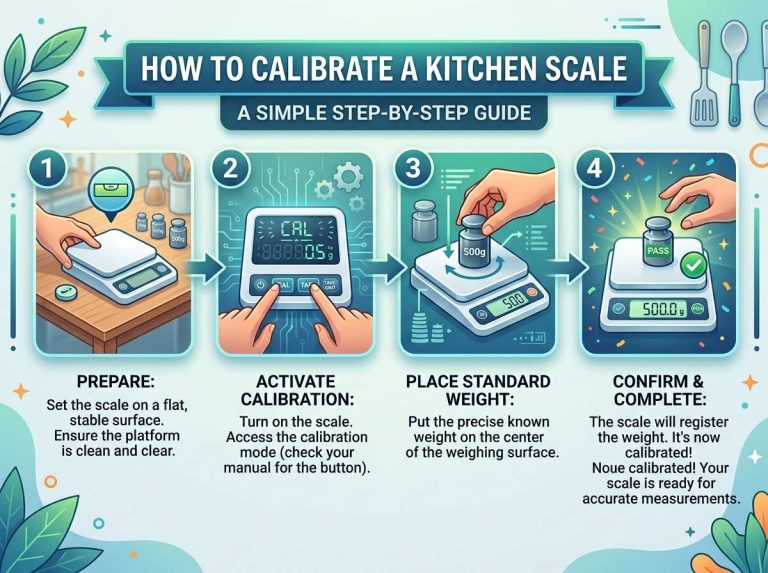
You can check how a scale behaves with a known weight, such as a standard weight set or a packet of an ingredient with a labelled weight. Place it gently on the platform and compare the reading. Never place heavy objects suddenly, since impact can damage the sensor.
Do not deliberately overload the scale to find its limit. Stay well below the stated maximum during any checks.
Capacity Examples From Real Cooking Tasks
Weighing Flour for Bread
A typical bread recipe may call for several hundred grams of flour, plus a bowl. The total weight is usually modest, so a mid-range scale often handles it well. Fine readability also helps with precise measurements.
Bread bakers often value readability as much as capacity. The scale should be accurate at the small steps that matter in baking.
Weighing Produce and Meat Portions
Produce and meat portions are usually light. A standard kitchen scale will comfortably handle them. Capacity becomes a concern only when you weigh a large cut or a heavy platter of food.
Weighing Liquids and Bowls With Containers
Weighing liquids often involves a bowl or jug on the platform. The container counts toward the total, which can push the load closer to the limit than you expect. Always account for the container when judging capacity.
For example, a heavy glass jug can add a surprising amount of weight before any liquid goes in. Remember this when you plan your scale size.
Capacity Compared With Other Scale Features
Capacity Versus Readability
Capacity tells you how much the scale can hold. Readability tells you how finely it can measure. Both features shape the scale’s usefulness, and neither replaces the other.
A high capacity scale with coarse steps may struggle with small baking amounts. A fine-readability scale with low capacity may not handle a large bowl. Balance both according to your needs.
Capacity Versus Platform Size
Platform size is the flat area where you place items. A large bowl may fit poorly on a small platform, even if the capacity is high enough. Check that the platform suits the containers you use most.
In practice, a wide platform should suit the containers you use, while the capacity should cover their combined weight. Both need a quick check before purchase.
Digital Versus Mechanical Scales
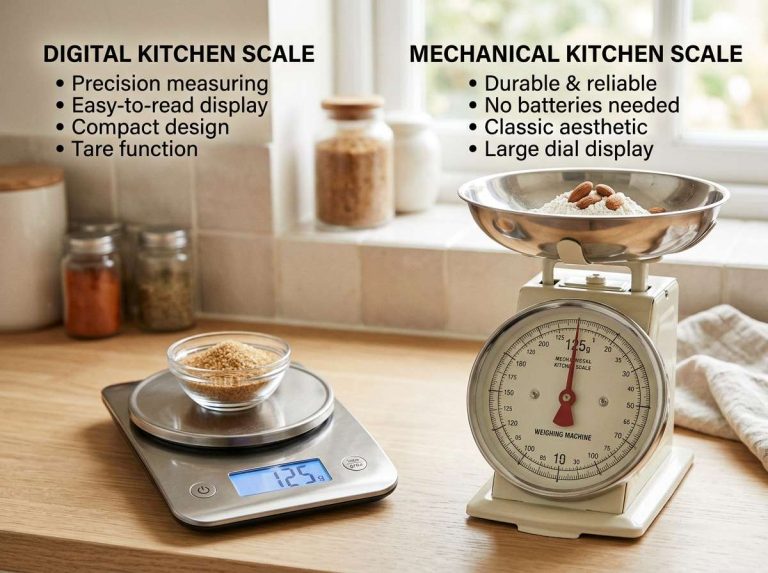
Digital scales show weight on a display, usually with fine steps. Mechanical scales use a dial and a spring or lever system. Each type can work well, but they differ in how they show readings and how their capacity is stated.
Because digital displays often show precise steps, many buyers look closely at readability on digital models. Mechanical scales are simpler, though they may not show small steps as clearly.
Tips for Staying Within Your Scale’s Capacity
Avoiding Overload Damage
Do not leave heavy pots or large bags on the platform for long periods. Lift items on and off gently rather than dropping them. Sudden force can strain the sensor even when the load is under the limit.
If the display shows an overload message, remove the item straight away. Continuing to press the scale can harm it.
Using Tare Function Without Exceeding Limits
The tare function resets the display to zero so you can weigh an ingredient inside a container. The container’s weight is subtracted from the reading. However, the container still sits on the platform and still counts toward the physical load.
Tare does not raise the capacity. Keep the combined weight of the container and ingredients within the stated maximum.
Caring for Your Scale Over Time
Keep the platform clean and dry. Wipe up spills promptly, since residue can affect readings. Store the scale on a flat surface rather than leaning it against a wall.
Also, check the scale now and then with a known weight. This helps you notice drift before it affects your cooking.
Frequently Asked Questions
What does kitchen scale capacity mean?
Kitchen scale capacity is the heaviest load the scale can measure within its working range. It is shown on the product label as a number with a unit, such as kilograms or pounds. Items above that figure fall outside the scale’s safe range.
What happens if I go over the maximum capacity?
Going over the maximum can give unreliable readings and may damage the sensor. Many scales show an overload warning when this happens. Remove the load straight away and check the scale before using it again.
Is a bigger capacity always better?
Not always. Larger capacity scales can sometimes have coarser readability, which matters for small baking amounts. A capacity that comfortably covers your usual loads is often the most practical choice.
What capacity do I need for baking?
Most home baking uses modest weights, so a mid-range capacity is often enough. Include the weight of your largest bowl when you decide. Fine readability is also important for accurate measures of flour, sugar and similar ingredients.
Does the tare function add to the capacity limit?
No, tare does not increase the capacity. It only subtracts the container’s weight from the displayed reading. The container still sits on the platform, so the combined physical weight must stay within the stated maximum.
Conclusion: Key Points About Kitchen Scale Capacity
Kitchen scale capacity is the maximum weight a scale can measure safely and accurately. It works alongside readability and platform size to shape how useful a scale is. Checking the label and matching the figure to your heaviest typical load helps avoid disappointment.
Remember to include container weight, stay comfortably below the top figure and handle the scale gently. With these simple habits, capacity becomes a clear, manageable part of everyday cooking.

Mary is a home cooking enthusiast and kitchen gear reviewer with a passion for practical cookware and food preparation tools. She enjoys testing cutting boards, knives, kitchen gadgets, and other cooking essentials to help home chefs make smarter buying decisions. Through KitchenCutting.com, Mary shares honest product reviews, buying guides, and helpful kitchen tips to make cooking easier, safer, and more enjoyable.