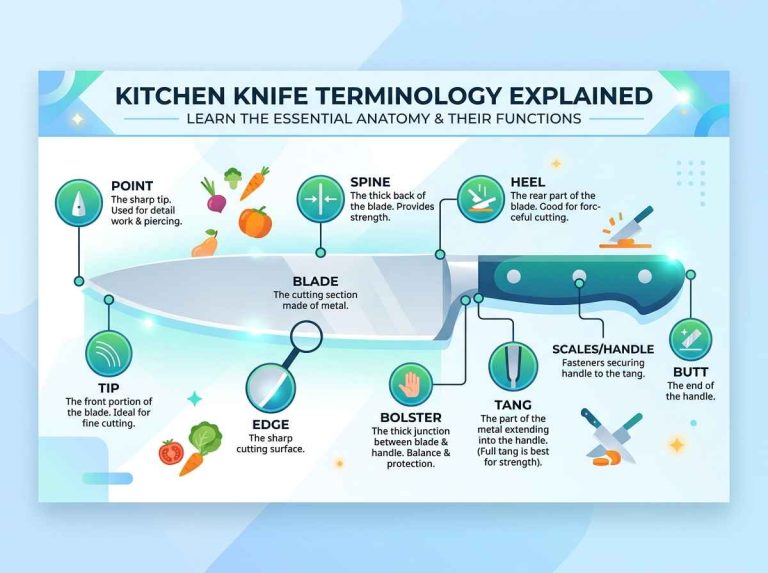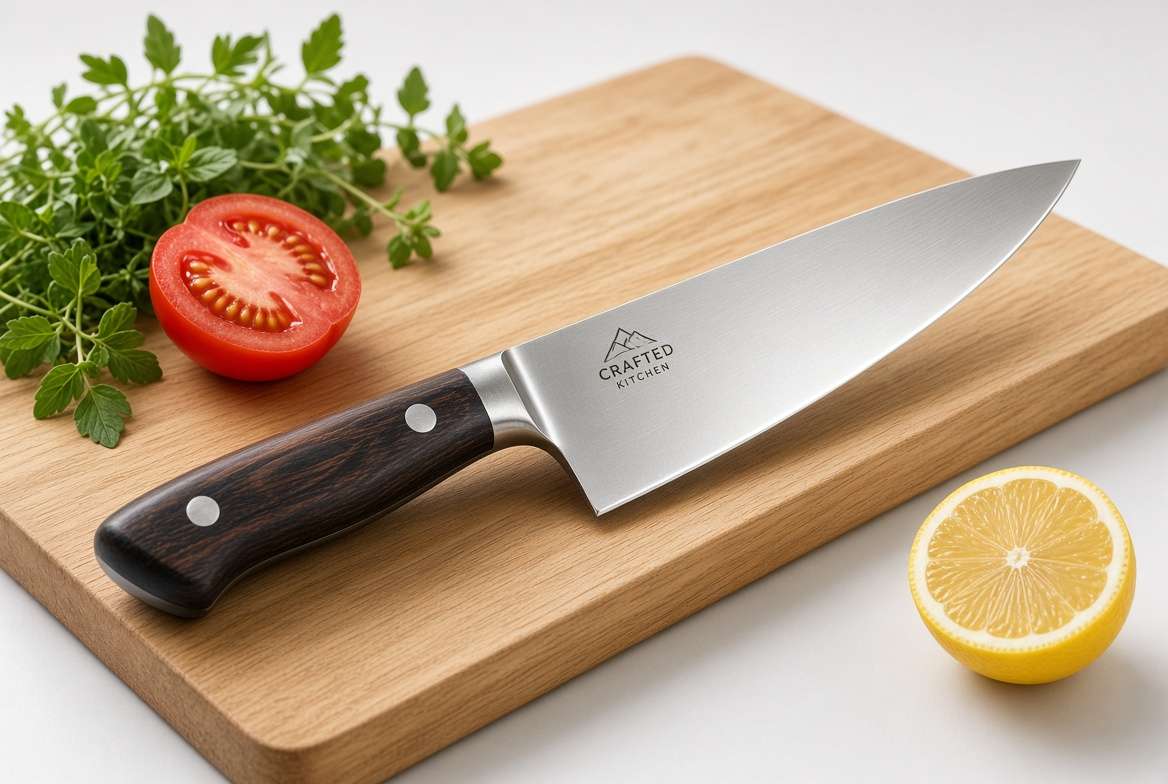
5 Best All Around Chef Knife In 2026
If you cook even a few times a week, one knife does most of the work. It slices onions, chops herbs, breaks down chicken, dices carrots, and smashes garlic. That is why people hunt for the best all around chef knife before they buy a fancy set. A good one makes prep faster, safer, and a lot less boring.
In this article
The problem is that the market is crowded. Some knives cost less than a pizza, and others cost more than a phone. Many of them look great in photos. Few of them tell you how they feel after twenty minutes of chopping.
This roundup looks at five popular options that cover different budgets and styles. You will find a plain-English review of each knife, a side-by-side comparison, a buying guide, care tips, and a final verdict. Every section uses simple words, so you can skim, jump around, or read start to finish.
One quick note on method. These reviews rely on the features each maker lists, the way these knives are built, and the long-running patterns in how kitchen knives behave in real homes. Where a claim comes from a product listing, the review says so. Sharpness, comfort, and balance can vary a little from knife to knife, so treat the details as a smart guide, not a lab report.
Quick Picks: Best All Around Chef Knife at a Glance
Short on time? This table gives you the fast version.
| Knife | Best For | Style | Handle | Standout Trait |
|---|---|---|---|---|
| Victorinox Fibrox Pro 8 Inch | Most home cooks | Swiss, stamped blade | Textured plastic (Fibrox) | Reliable, light, easy to sharpen |
| PAUDIN 8 Inch | Gift buyers, budget shoppers | Single knife, German-style look | Ergonomic handle, gift box | Low cost with a nice presentation |
| Brewin CHEFILOSOPHI 5 Piece Set | People who need a full starter set | Japanese-style set | Red pakkawood | Several knives in one purchase |
| Mercer Culinary Millennia 8 Inch | Beginners, students, busy kitchens | Stamped, restaurant-style | Textured Santoprene | Grippy handle at a friendly price |
| HOSHANHO 8 Inch | Cooks who like a sharper, Japanese-style edge | Japanese-style single knife | Ergonomic, non-slip | Sharp edge with a modern look |
If you want one sentence: the Victorinox is the safest all-purpose pick, the Mercer is the best grip for the money, the HOSHANHO is the sharper-feeling option, the PAUDIN is a budget gift idea, and the Brewin set makes sense when you need more than one blade.
What Makes a Chef Knife “All Around”?
A chef knife is the main blade in most kitchens. It has a wide, curved blade that rocks on a cutting board. An all around chef knife does many jobs without fuss. You should not need a separate knife for every task.
Here is what that really means in a home kitchen.
Size: Eight Inches Is the Sweet Spot
Most reviewers and cooks agree that an 8 inch chef knife is the best size for general use. It feels big enough to chop a cabbage, and small enough that a beginner will not feel scared of it. Shorter knives, like six inches, struggle with large vegetables. Longer ones, like ten inches, need more space and more confidence.
All five picks here use an eight-inch blade, or in the case of the set, include one.
Balance and Weight
A knife that feels too heavy tires your wrist. A knife that feels too light can bounce around and feel twitchy. A balanced knife sits comfortably when you pinch the blade right where it meets the handle.
German-style knives tend to feel a little heavier and thicker. Japanese-style knives tend to feel lighter and thinner. Neither style is better. It comes down to how you cut.
A Comfortable, Safe Grip
Your hands get wet, oily, and slippery in the kitchen. A good handle keeps its grip in those moments. Textured plastic and rubber-like handles usually do this well. Wood and pakkawood handles look nicer, but they need more care.
Steel and Edge Retention
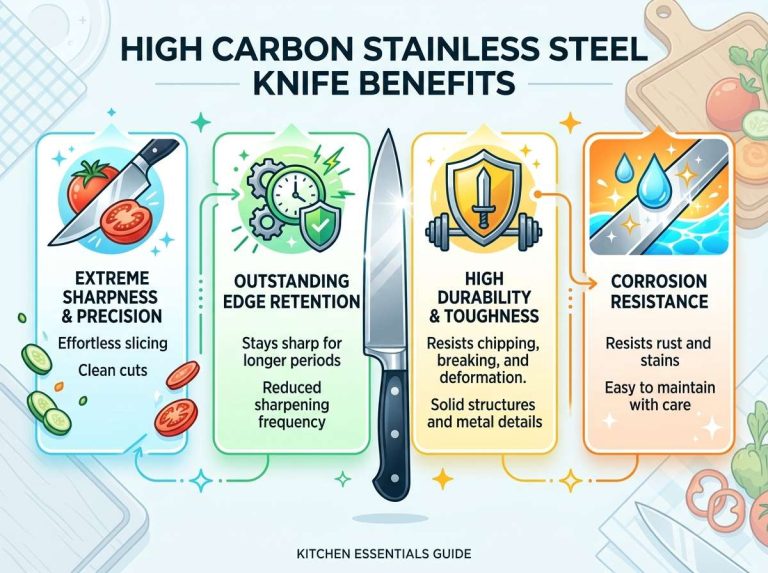
Steel is the metal in the blade. Soft steel sharpens easily but dulls faster. Harder steel stays sharp longer but can chip if you misuse it. Most budget chef knives use some kind of high carbon stainless steel, which tries to balance sharpness, rust resistance, and ease of care.
Ease of Maintenance
The best all around chef knife is not the one that stays razor sharp forever. It is the one that is easy to bring back to sharp. A knife you can hone and sharpen at home gets used. A knife that feels like a chore ends up in a drawer.
How These Five Knives Were Compared
Each knife got the same simple checklist, so the review stays fair:
- Blade shape and size: Does it suit chopping, slicing, and dicing?
- Steel and build: What does the maker claim, and is it believable at this price?
- Handle and comfort: Does it look secure when wet and during long prep sessions?
- Sharpness and edge life: What can a normal cook expect?
- Ease of use: Is it friendly for beginners?
- Care needs: How fussy is it?
- Value for money: Does the price match what you get?
Now let’s get into the knives.
1. Victorinox Fibrox Pro 8 Inch Chef’s Knife
What It Is
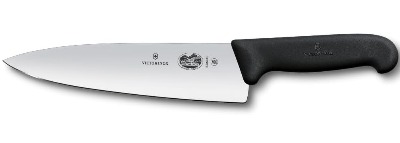
The Victorinox Fibrox Pro is a Swiss-made, stamped-blade chef knife that has a loyal following among home cooks and professionals. It does not try to look fancy. It has a plain black handle, a straight, clean blade, and a simple look that says “tool,” not “decoration.”
The listing for this model also notes that it is dishwasher safe. That is useful to know, but we cover care advice below, because the dishwasher is rarely kind to any sharp edge.
Best Use Cases
This knife shines in everyday cooking. Think weeknight dinners, meal prep, and general chopping. It handles onions, peppers, carrots, potatoes, chicken breasts, and herbs with little drama. If you only plan to own one knife for a long time, this is a safe place to start.
Key Features Explained Simply
- 8 inch blade: The standard size for chopping and slicing.
- High carbon stainless steel blade: A common mix that holds an edge fairly well and resists rust better than plain carbon steel.
- Fibrox handle: A textured, slightly rubbery handle designed to stay grippy, even when your hands are wet.
- Light weight: It feels nimble, which many beginners like.
- Black, no-fuss design: Nothing flashy, and nothing that will fall off or crack.
Real-Life Usage Insight
Stamped knives like this one are cut from a sheet of steel instead of forged from a thick bar. They feel lighter and thinner. When you rock the blade through a pile of parsley, it glides. When you dice an onion, the blade slips through with little resistance.
Because the handle has texture, it does not feel slippery after you cut something wet, like a tomato or a lemon. Many busy kitchens use this knife for exactly that reason. It does not mind being used hard all day.
The blade is not super heavy, so it will not power through tough jobs like hacking through bones. Use a cleaver for that. For normal vegetable and meat prep, though, it handles things well.
Performance
Out of the box, expect a sharp, clean edge that handles tomatoes and onions without squashing them. The steel is not super hard, so the edge will fade after regular use, but the upside is that it comes back quickly with a honing rod or a basic sharpener. For a beginner, that is a big win. You can fix a dull Victorinox in a few minutes.
Ease of Use
This is one of the most beginner-friendly chef knives around. The weight feels forgiving. The handle feels secure. The blade shape follows the classic chef knife curve, so it teaches good rocking and slicing habits.
Pros
- Trusted, widely used design
- Light and easy to control
- Grippy handle that stays secure when wet
- Easy to hone and sharpen
- Strong value for the price
Cons
- The handle looks plain and a bit “plasticky”
- Not as hard or as long-lasting an edge as premium steels
- Lightweight feel may not suit people who like a heavy knife
Value for Money
This knife costs far less than many designer brands, and it performs like a knife that costs more. For most households, it delivers the most reliable results per dollar, which is why it often tops “best all purpose kitchen knife” lists.
2. PAUDIN 8 Inch High Carbon Stainless Steel Chef Knife
What It Is
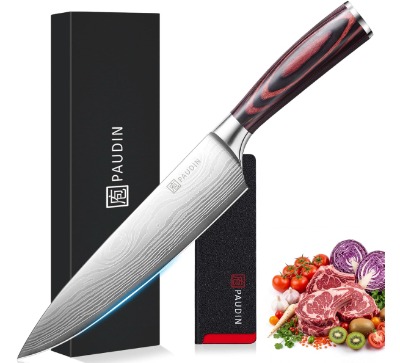
The PAUDIN is a budget-friendly eight-inch chef knife that arrives in a gift box. The listing describes it as made from high carbon stainless steel, with an ergonomic handle and a sharp edge, aimed at family kitchens and restaurant use.
The gift box makes it an easy present for a new cook, a college student, or a housewarming. It looks neat on arrival, and it does not look like a cheap knife.
Best Use Cases
This knife is a good fit for light-to-medium home cooking: slicing vegetables, trimming chicken, chopping herbs, and handling daily prep. It also works as a backup knife or a gift for someone who just moved into a first apartment.
Key Features Explained Simply
- High carbon stainless steel blade: The listing uses this term. In plain words, it is a steel designed to balance sharpness with rust resistance.
- 8 inch length: The classic size, good for most tasks.
- Ergonomic handle: Shaped to fit the hand without sharp corners.
- Gift box packaging: Handy if you plan to give the knife to someone.
Real-Life Usage Insight
In daily use, a knife like this behaves the way most budget chef knives behave. It starts out sharp, and it does a nice job on soft foods like tomatoes, onions, cucumbers, and chicken. After a while, the edge needs a touch-up, which is normal for this price range.
The handle shape feels comfortable for medium-sized hands. People with very small or very large hands should check the listing photos and measurements, because “ergonomic” can mean different things to different people.
Performance
For the money, expect decent slicing and chopping. Do not expect it to hold an edge for months without help. Hone it often, sharpen it when it starts to slide instead of bite, and it should serve a beginner well.
Hard jobs, like cutting through frozen food or bone, are not what this knife is for. Using any thin kitchen knife that way can chip the edge.
Ease of Use
Beginners will find this knife easy to handle. It has a familiar shape, a reasonable weight, and a handle without strange angles. It does not teach anything new, but it does not get in the way, either.
Pros
- Friendly price
- Nice gift box, so it is ready to give
- Comfortable, simple shape
- Good for light daily cooking
- Easy to pick up for a new cook
Cons
- Edge life will not match higher-end steels
- Brand is less proven over many years than older names
- Build quality can feel less refined up close
Value for Money
If you want an inexpensive knife that looks good in a box and handles daily cooking, the PAUDIN is a fair deal. It does not beat the Victorinox for long-term trust, but it costs little and gets the job done for a casual cook.
3. Brewin CHEFILOSOPHI Japanese Chef Knife Set (5 Piece)
What It Is
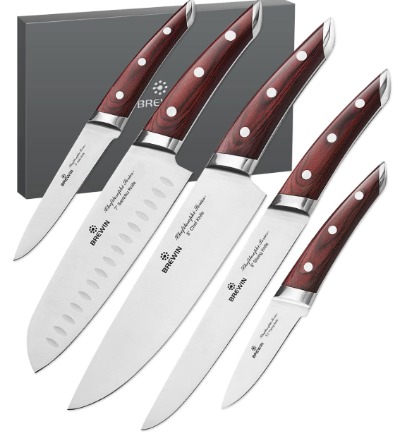
This one is different from the rest, because it is a set. The Brewin CHEFILOSOPHI comes with five knives, a red pakkawood handle design, and a Japanese-inspired look. The listing says it uses high carbon stainless steel and describes the knives as professional and ultra sharp.
Since this is a multi-piece set, the exact blade lineup can differ from listing to listing. Check the product page before you buy so you know which knives you get and the size of the main chef knife.
Best Use Cases
A set suits someone who is starting a kitchen from scratch. If you have no knives at all, you can grab one box and cover the main jobs: big chopping, slicing, small-fruit work, and peeling or trimming. It also works as a wedding gift or a move-in gift.
If you already have one good chef knife, this set will matter less. You may only need a single better blade instead.
Key Features Explained Simply
- Five-piece set: Several blades for different jobs, so you do not need to buy them one at a time.
- High carbon stainless steel: Aimed at a sharp edge with decent rust resistance.
- Red pakkawood handles: Pakkawood is wood soaked in resin, which makes it tougher and more water resistant than plain wood.
- Ergonomic design: The handles are shaped for a comfortable hold.
- Japanese-style look: Usually thinner blades and a lighter feel than German-style knives.
Real-Life Usage Insight
A set like this changes the way you cook, because you grab the right size knife for each job. A small paring knife for hulling strawberries is easier than using a big chef knife. A longer slicing knife helps with roasts and larger cuts.
The red handles make the set stand out in a drawer or on a block. They look special, which is part of the appeal. The tradeoff is care. Pakkawood handles handle moisture better than plain wood, but they still should not sit in water, and they do not enjoy the dishwasher.
Performance
Thin, Japanese-style blades usually slice with little resistance. They feel sharp, and they can make clean cuts through vegetables and boneless meats. They also tend to be a bit more delicate than thicker German-style blades, so avoid twisting, prying, or cutting hard items.
Edge life depends on the steel and the heat treatment, which vary between brands and are hard to verify from a listing alone. Treat the “ultra sharp” claim as a starting point, and plan to hone the knives regularly.
Ease of Use
For the main chef knife, ease depends on how it feels in your hand, since lighter blades can feel quick. Beginners often like lighter knives because they take less effort. The extra knives in the set also lower the chance that you will use the wrong blade for a job.
Pros
- Several knives in one purchase
- Attractive, eye-catching handle design
- Thin, sharp blades suit slicing and fine work
- Good starter option for a new kitchen
- Works well as a gift
Cons
- Spreads the budget across multiple blades, so each knife may be less refined than a single quality knife
- Handles need more careful drying and washing
- Thin blades can chip if you misuse them
- Exact set contents depend on the listing
Value for Money
If you need a full set, this is a fair way to get started. If your main goal is the best single all around chef knife, a dedicated single blade usually gives you more quality for the same money.
4. Mercer Culinary M22608 Millennia 8 Inch Chef’s Knife
What It Is
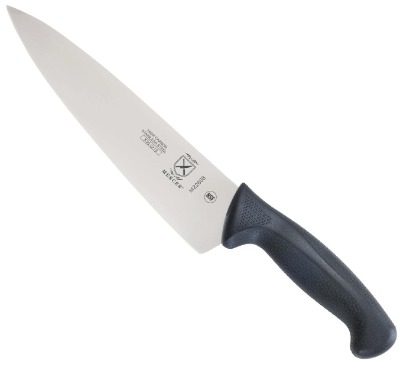
The Mercer Millennia is a well-known knife from a brand that supplies many culinary schools and professional kitchens. It has an eight-inch stamped blade made from high-carbon steel, and a black handle with a textured, rubber-like grip.
Mercer is a common name among cooking students and line cooks, because it offers solid performance for a small price.
Best Use Cases
This knife suits beginners, students, busy home cooks, and anyone who wants a dependable workhorse. It handles everything from onions and potatoes to chicken and herbs. It is also a smart second knife for a household that already owns a fancy one but wants something to use for rough jobs.
Key Features Explained Simply
- 8 inch blade: The standard size for chopping and slicing.
- High-carbon steel blade: Designed to take a good edge and sharpen easily.
- Textured Santoprene handle: A grippy, rubbery material that stays secure when wet or oily.
- Finger guard-style shape: The handle shape helps stop your hand from sliding forward.
- Commercial-kitchen reputation: Built to handle long hours in busy kitchens.
Real-Life Usage Insight
The first thing most people notice is the handle. It has small textured spots that grip well. Even when you are cutting greasy chicken skin or slippery vegetables, the knife feels steady in the hand.
The blade itself feels thin and lively. It glides through onions and peppers with ease. Because it is a stamped blade, it weighs less than many forged knives, which keeps your wrist fresh during long prep sessions.
The tradeoff is simple. The steel is not meant to hold a razor edge for months. Instead, it sharpens quickly, which fits a busy kitchen where you hone often.
Performance
Expect a sharp, practical edge that slices cleanly through most foods. Chopping herbs, dicing onions, and breaking down chicken all go smoothly. Do not try to cut very hard foods, like frozen items, with it.
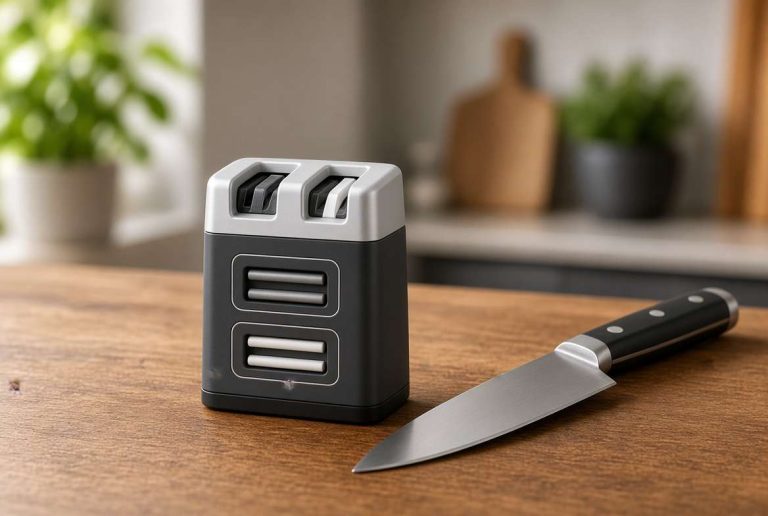
Hone it often to keep the edge fresh, and sharpen it every so often with a stone or a decent pull-through sharpener.
Ease of Use
This knife is very beginner-friendly. It feels light, grips well, and has a classic shape. If you are new to knife skills, the handle will give you confidence.
Pros
- Excellent grip, even with wet hands
- Light, easy to control
- Trusted in culinary schools and professional kitchens
- Easy to sharpen
- Very good value
Cons
- Plain look
- Edge life is average
- Handle texture can collect grime if you do not scrub it
- Some cooks prefer a heavier knife
Value for Money
The Mercer Millennia offers much of what makes the Victorinox great, with an even grippier handle. Many people see the two as close rivals. If you have a choice, try to hold both. Either one is a very smart buy.
5. HOSHANHO 8 Inch Japanese High Carbon Steel Chef’s Knife
What It Is
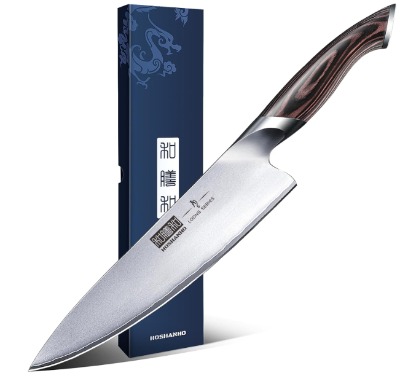
The HOSHANHO is an eight-inch chef knife that markets itself as a Japanese-style knife made from high carbon steel. The listing highlights a professional look, an ultra-sharp edge, a non-slip handle, and an ergonomic design.
It sits on the more stylish side of this list. It looks like a knife you would pull out for guests.
Best Use Cases
This knife is best for cooks who like a sharper, thinner blade and want something that looks good on the counter. It handles vegetables, boneless meats, fish, and fruit with ease. If you love slicing thin tomatoes or paper-thin cucumbers, a knife like this is fun to use.
Key Features Explained Simply
- Japanese high carbon steel (per the listing): Usually means a harder, sharper blade that holds an edge longer, though it can be a bit more brittle.
- 8 inch blade: The standard all-purpose length.
- Non-slip ergonomic handle: Shaped and textured to stay secure in the hand.
- Ultra-sharp edge: The brand’s description of the factory edge.
- Modern, professional look: A polished appearance that suits gift-giving.
Real-Life Usage Insight
Harder, thinner blades feel different. Slices come out cleaner. A ripe tomato opens without squishing. Herbs get cut instead of crushed. Many people say a sharp Japanese-style knife makes cutting feel almost effortless.
The catch is care. A harder blade can chip if you hit bone, twist it in a tough vegetable, or drop it. Treat it kindly. Use a wooden or plastic cutting board, and avoid glass, stone, or marble surfaces that can damage the edge.
Performance
Expect strong slicing performance, particularly for vegetables and boneless proteins. Edge retention can be better than softer-steel knives, as long as you avoid misuse. Sharpening a harder steel takes a little more effort, though a decent whetstone or guided sharpener will handle it.
Ease of Use
Beginners can use it comfortably, but they should respect the thin edge. The light feel helps with control. The handle gives a secure hold. Just remember to cut with smooth, clean motions and avoid prying.
Pros
- Very sharp feel for slicing
- Light, nimble handling
- Attractive look suits gifting
- Non-slip handle design
- Good for vegetables and boneless meats
Cons
- Harder steel can chip if you misuse it
- Not a good choice for bones or frozen food
- Newer brand, with less long-term history than Victorinox or Mercer
- Takes a bit more skill to sharpen well
Value for Money
The HOSHANHO offers a premium look and a sharp feel at a price that stays friendly. It suits cooks who care about slicing quality. If you want maximum toughness, the Victorinox or Mercer fits better.
Side-by-Side Comparison: How the Five Knives Stack Up
Numbers and labels help, so here is a more detailed comparison.
| Feature | Victorinox Fibrox Pro | PAUDIN 8 Inch | Brewin 5 Piece Set | Mercer Millennia | HOSHANHO 8 Inch |
|---|---|---|---|---|---|
| Blade length | 8 inch | 8 inch | Set (check listing) | 8 inch | 8 inch |
| Blade style | Stamped, lightweight | Single knife | Japanese-style set | Stamped, lightweight | Japanese-style |
| Steel (per listing) | High carbon stainless | High carbon stainless | High carbon stainless | High-carbon | Japanese high carbon |
| Handle | Textured Fibrox | Ergonomic | Red pakkawood | Textured Santoprene | Non-slip ergonomic |
| Grip when wet | Very good | Good | Fair (needs care) | Excellent | Good |
| Edge feel | Sharp, easy to refresh | Sharp, average life | Sharp, thin | Sharp, easy to refresh | Very sharp, thin |
| Care effort | Low | Low to medium | Medium to high | Low | Medium |
| Beginner friendliness | Excellent | Good | Good | Excellent | Good |
| Toughness | High | Medium | Medium | High | Medium (can chip) |
| Best as | Main all-purpose knife | Gift or budget knife | Starter set | Workhorse knife | Slicing-focused knife |
What the Table Tells Us
Three knives focus on toughness and ease: the Victorinox, the Mercer, and, to a point, the PAUDIN. They suit beginners who want a forgiving tool.
Two knives focus more on sharpness and style: the Brewin set and the HOSHANHO. They suit cooks who like a thinner, Japanese-style feel.
Which Knife Wins in Different Situations?
Different kitchens need different tools. This quick guide helps you match a knife to your life.
Best Overall Pick
The Victorinox Fibrox Pro earns this spot. It does a little of everything well, stays easy to maintain, and feels comfortable for most hands. It is the knife that most people can buy and not regret.
Best Grip for the Money
The Mercer Millennia wins here. Its textured handle feels secure, even in messy, wet kitchens.
Best for Slicing Lovers
The HOSHANHO takes this one. Its thin, sharp blade suits thin slices of vegetables, fish, and boneless meats.
Best Gift Under a Small Budget
The PAUDIN wins on presentation. The gift box makes it ready to hand over, and the price keeps the risk low.
Best Starter Kit
The Brewin CHEFILOSOPHI set suits people building a kitchen from scratch. You get several knives in one purchase.
Buying Guide: How to Pick the Best All Around Chef Knife
Now that you have seen the options, here is how to shop on your own. This guide works for any brand, not just these five.
Step 1: Decide Your Real Needs
Ask yourself a few simple questions. How often do you cook? What do you cut most? Do you hate cleaning? Do you want a gift or a daily tool? Your answers point you toward a style.
Step 2: Pick Between German-Style and Japanese-Style
Here is the simple version.
- German-style knives are usually thicker, heavier, and tougher. They handle rough use well and suit people who chop hard vegetables or break down chicken often.
- Japanese-style knives are usually thinner, lighter, and sharper. They slice cleanly and suit people who care about precision.
Many modern knives mix traits from both, so use these as loose guides, not strict rules.
Step 3: Look at the Steel
Steel decides how long the knife stays sharp and how easy it is to care for.
- Softer steel sharpens easily but dulls faster.
- Harder steel holds an edge longer but can chip.
- Stainless steel resists rust.
- High carbon steel takes a sharper edge but needs more care if it is not stainless.
For most beginners, a high carbon stainless blade gives a nice balance.
Step 4: Check the Handle
The handle matters as much as the blade. Look for a shape that fits your hand, a surface that stays grippy, and no sharp edges that dig into your fingers. If you can, hold the knife before you buy it. Hands come in many sizes, and what feels great to one person feels awkward to another.
Step 5: Think About Weight and Balance
Pinch the blade near the handle. If it stays level, the balance is good. If it tips toward the blade or the handle, the knife may feel clumsy after a while. Lighter knives suit quick chopping. Heavier knives suit people who like the blade to do the work.
Step 6: Consider Care Needs
Be honest about how you treat your tools. If you throw everything in the dishwasher, pick a knife with a handle that handles abuse well, like a textured plastic one. If you enjoy caring for your tools, a pakkawood handle or a harder steel blade is fine.
Step 7: Set a Fair Budget
You do not need to spend a lot. A well-made, mid-priced knife often beats an expensive one that you are afraid to use. Spend a little extra on a good honing rod or sharpener, because a sharp cheap knife beats a dull expensive one every time.
How to Take Care of Your Chef Knife
Even the best all around chef knife needs a little love. These simple habits help it last for years.
Wash by Hand
Some listings say a knife is dishwasher safe, and that may be technically true. Still, dishwashers bang knives against other items, expose them to harsh detergent, and can dull the edge. Washing by hand takes less than a minute and protects the blade.
Dry Right Away
Water leaves spots and, over time, can cause rust. Wipe the blade dry with a towel after washing. Pay extra attention to wood handles.
Hone Often, Sharpen Sometimes
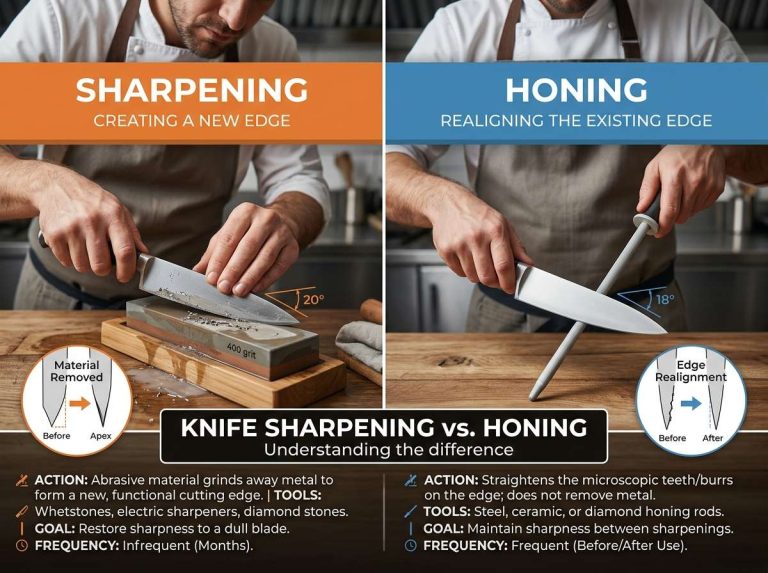
A honing rod straightens the edge between sharpenings. A few light passes before cooking keep the knife feeling sharp. A real sharpening, with a whetstone or a quality sharpener, removes metal and creates a new edge. Most home cooks need this a few times each year, depending on use.
Use the Right Cutting Board
Wood and plastic boards are gentle on edges. Glass, marble, and stone boards dull a blade quickly. Pick a board that protects your knife.
Store Safely
Do not toss knives into a drawer with other metal tools. Use a knife block, a magnetic strip, or a blade guard. This protects both the edge and your fingers.
Who Should Buy Which Knife?
Here is a plain-English guide to help you match a knife to your habits.
Buy the Victorinox If…
You want one dependable knife that handles nearly everything. You like simple tools, and you want something that is easy to sharpen and hard to ruin.
Buy the PAUDIN If…
You are shopping for a gift, or you want an inexpensive knife for light cooking. You want a neat package and a comfortable shape.
Buy the Brewin Set If…
You are setting up a first kitchen and need several knives at once. You like a stylish look and plan to handle the knives with care.
Buy the Mercer If…
You want a rugged workhorse with a grippy handle. You cook often, or you are learning knife skills and want a forgiving tool.
Buy the HOSHANHO If…
You enjoy thin slicing, like the feel of a sharp Japanese-style edge, and are happy to treat your knife gently.
Common Mistakes to Avoid When Buying and Using a Chef Knife
A lot of knife frustration comes from small errors. Avoid these and your knife will last longer and feel better.
Mistake 1: Buying a Big Set You Do Not Need
Large sets look like a bargain, but many contain knives you will never touch. If you cook simple meals, a chef knife, a paring knife, and a serrated bread knife cover almost everything.
Mistake 2: Ignoring Handle Comfort
A knife can have great steel and still feel awful in your hand. Always think about grip, shape, and weight. If you cook for an hour and your hand hurts, the knife is wrong for you.
Mistake 3: Skipping the Honing Rod
Many people think a knife dulls because it is bad. Often it just needs honing. A quick pass on a rod can bring back a lot of the bite.
Mistake 4: Using the Knife for Everything
A chef knife is not a can opener, a screwdriver, or a bone breaker. Prying, twisting, and chopping through frozen food can chip or bend the blade. Use the right tool for hard jobs.
Mistake 5: Cutting on Hard Surfaces
Glass plates, stone counters, and ceramic boards ruin edges fast. Stick with wood or plastic.
Mistake 6: Trusting Hype Over Fit
Big claims like “ultra sharp” or “professional grade” are common in listings. They tell you what the brand hopes you will think. Look at the steel, handle, size, and care needs instead, and match them to how you cook.
Mistake 7: Letting the Knife Soak
Leaving a knife in a sink full of water is bad for any handle and any blade. It leads to rust spots, loose handles, and damaged finishes. Wash it, dry it, and put it away.
Frequently Asked Questions About the Best All Around Chef Knife
What size is best for an all-purpose kitchen knife?
Most cooks find eight inches the most useful. It handles large and small jobs without feeling scary.
Is a Japanese or German chef knife better?
Neither wins every time. German-style knives feel tougher and heavier. Japanese-style knives feel lighter and sharper. Pick the feel you enjoy.
How often should I sharpen my chef knife?
It depends on how much you cook. Many home cooks sharpen a few times each year and hone before most cooking sessions.
Are cheap chef knives worth buying?
Yes, many are. A well-made budget knife like the Victorinox or the Mercer can beat much pricier options for everyday work. Just keep your expectations realistic for edge life.
Can I put my chef knife in the dishwasher?
Some are labeled dishwasher safe, but hand washing protects the edge and the handle. If you want your knife to last, wash it by hand.
Do I need a knife set?
Not usually. One great chef knife, a paring knife, and a bread knife cover most kitchens. A set helps if you are starting from zero and want everything at once.
What is the difference between honing and sharpening?
Honing straightens the edge, and sharpening removes metal to create a new one. Honing is quick and frequent. Sharpening is occasional.
Final Verdict: The Best All Around Chef Knife
After comparing all five, one answer stands out for most people. The Victorinox Fibrox Pro 8 Inch Chef’s Knife is the best all around chef knife in this roundup. It is light, tough, comfortable, easy to sharpen, and fairly priced. It does not try to impress with looks. It simply does the job, day after day, with very little fuss.
The Mercer Culinary Millennia comes a very close second. If grip matters most to you, or if you cook in a messy, fast-moving kitchen, it might even be the better pick. Many people would be happy with either one.
The HOSHANHO is the pick for slicing fans who like a sharper, thinner Japanese-style edge, and who will treat the knife with care. The PAUDIN makes a thoughtful, low-cost gift, and a decent starter knife for light cooking. The Brewin CHEFILOSOPHI set works well for people who need a full lineup right away and like a stylish look.
Here is the short version:
- Best overall: Victorinox Fibrox Pro 8 Inch
- Best grip and workhorse feel: Mercer Culinary Millennia 8 Inch
- Best for sharp slicing: HOSHANHO 8 Inch
- Best budget gift: PAUDIN 8 Inch
- Best starter set: Brewin CHEFILOSOPHI 5 Piece Set
One last tip. No knife stays sharp on its own. Pair whichever one you pick with a honing rod, a basic sharpener, and a wooden or plastic cutting board. That small kit does more for your cooking than spending extra on a fancier blade. A well-kept, mid-priced knife will beat a neglected expensive one every time, and you will enjoy cooking more when your knife glides instead of fights back.
Pick the one that fits your hands, your habits, and your budget, and you will have a reliable kitchen partner for years.

Mary is a home cooking enthusiast and kitchen gear reviewer with a passion for practical cookware and food preparation tools. She enjoys testing cutting boards, knives, kitchen gadgets, and other cooking essentials to help home chefs make smarter buying decisions. Through KitchenCutting.com, Mary shares honest product reviews, buying guides, and helpful kitchen tips to make cooking easier, safer, and more enjoyable.