5 Best Cheap Knife Set In 2026
As an Amazon Associate we earn from qualifying purchases.
Shopping for a cheap knife set can feel confusing. Many sets look alike online, and the prices are low enough that it is hard to know which one will actually handle everyday cooking. This guide helps beginners and first-time kitchen owners see what a budget knife set offers and where it may fall short.
The five products here share a few traits. Each is a multi-piece set sold at a low price, and each includes a set of common kitchen knives, often with a block or sheath for storage.
This comparison rests on the listed features and typical use of each set, not on personal testing, so treat the points below as a guide to what each set is described to do. Read the product listing yourself before you buy, since details can change.


1. Brewin Knife Set: best for a full starter kit with a sharpener
The Brewin Knife Set is an eight-piece kit built for a complete starter kitchen. It includes an eight-inch chef knife, an eight-inch slicing knife, an eight-inch bread knife, a five-inch utility knife, a five-inch santoku knife, kitchen scissors, a knife sharpener and a universal block. Most buyers who want one box that covers most tasks will find this set easy to understand.
A set like this can save you from buying items one at a time. For example, a bread knife handles crusty loaves and soft tomatoes, while a utility knife is useful for smaller jobs like trimming fruit or cutting sandwiches. Having both in one box means you can start cooking right away.
What the set includes
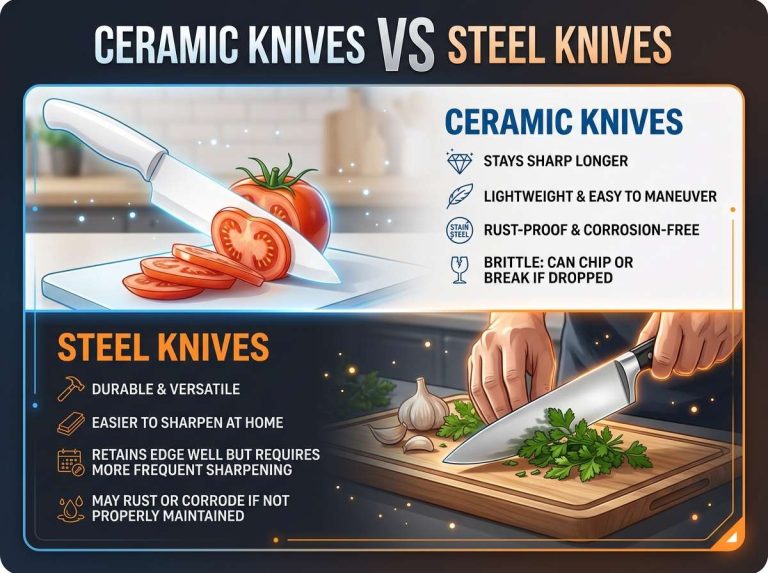
The main blades are made from 1.4116 stainless steel, a German grade often used in kitchen knives. Stainless steel resists rust better than plain carbon steel, which is why it is common in home kitchens. Carbon steel can sharpen to a very keen edge, but it needs more drying and care to avoid staining.
The set also adds scissors and a sharpener, which many starter sets leave out. Kitchen scissors are handy for herbs, poultry and packaging. A sharpener helps you keep the blades working, though a basic pull-through sharpener does not restore an edge as well as a whetstone or a professional service.
How the blades are described
The product data lists a hardness rating of 56 or higher on the Rockwell scale, which measures how hard steel is. Harder steel usually holds an edge longer, though it can be harder to re-sharpen. Very hard blades can also chip if they hit bone or are used to pry, so avoid those tasks.
The blades are described as hand-polished to an edge angle of 14 to 16 degrees per side, a fairly fine angle that suits slicing and light chopping. A finer angle cuts with less resistance, but it can wear faster under heavy use, such as cutting through squash or frozen food.
Daily use and handling
The handles have textured anti-slip dots, which help the hand stay in place when wet or greasy. In daily prep, that grip matters more than most beginners expect. A knife that slips can cause cuts, so a secure hold is a real safety point.
The block is made of high-density polypropylene, a sturdy plastic, and has drainage holes so water does not pool inside. Keeping the block dry helps prevent mold and odors. A block also protects blade edges better than a loose drawer, where knives can knock against other utensils.
Cleaning
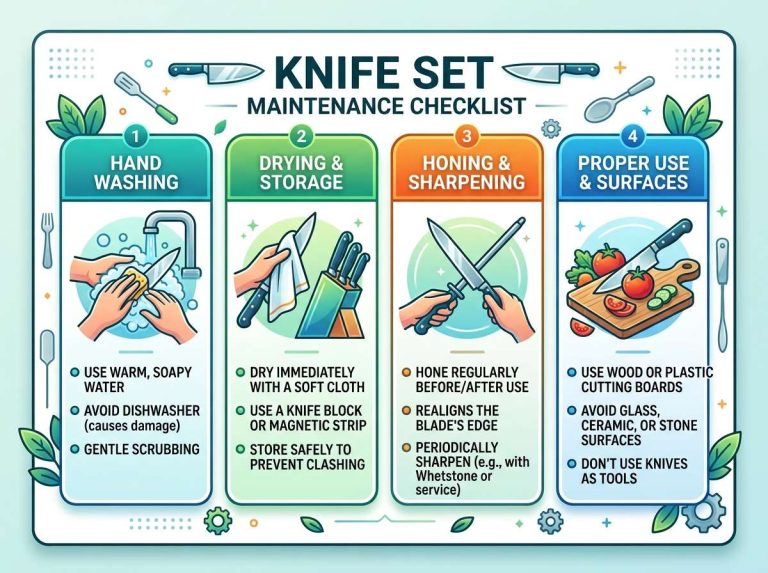
Both the knives and the block are listed as dishwasher safe. Still, many knife makers suggest hand washing, because the dishwasher can dull edges and loosen handles over time. Hand washing with warm water and mild soap, then drying right away, is a simple habit that extends the life of most knives.
Picking the dishwasher or the sink is a personal call. If you value convenience, the dishwasher labeling gives you that option. If you want the longest edge life, hand washing is the safer routine.
Value for money
For the price, the Brewin set offers the widest range of pieces among these five products. It suits a buyer who wants a complete starting point rather than a minimal set. A smaller set may cost less, but you may need to buy scissors, a sharpener or a specialty knife later, which can close the price gap.
Check the current price and return policy before buying, since both can change. A set you can return if it does not suit your kitchen is worth more than a slightly lower price with no option to exchange.
Pros
- Eight pieces cover most common kitchen tasks.
- Includes a sharpener and scissors, which many budget sets lack.
- Textured handles offer a secure, anti-slip grip.
- Block has drainage holes to keep it drier.
Cons
- Dishwasher safe labeling does not mean dishwasher is best for the blades.
- Blade hardness is high, so re-sharpening may take more care.
- Plastic block may feel less solid than a wood block.
2. NULAS 8-Piece Kitchen Knife Set: best for an all-black, gift-ready set
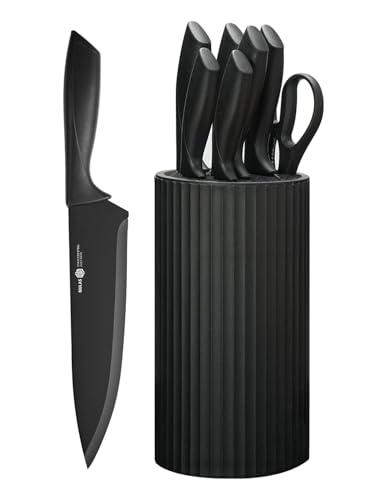
The NULAS 8-Piece Kitchen Knife Set is a black-coated set with six knives, kitchen shears and a universal block. It is a good fit for someone who wants a matching look and a set that is easy to give as a present. The box is described as gift-ready, so it can often go straight under a tree or onto a gift table without extra wrapping.
What the set includes
The six knives are an eight-inch chef knife, an eight-inch slicing knife, an eight-inch serrated bread knife, a seven-inch santoku knife, a five-inch utility knife and a three-and-a-half-inch paring knife. The set adds kitchen shears and a compact block. Together these tools cover chopping, slicing and small trimming jobs, such as dicing onions with the chef knife, carving a roast with the slicing knife and peeling apples with the paring knife.
Coating and finish
The black coating is described as resistant to rust, oxidation and stains. It is also said to reduce food sticking to the blades. A coating like this can help with cleanup, especially when slicing sticky foods such as cheese or ripe fruit. Still, coatings can wear over time with heavy use, so it is wise to treat the finish gently and avoid cutting on hard surfaces.
Handling and comfort
The handles are shaped to fit the hand and are meant to offer a secure grip during daily prep. The serrated bread knife has a toothed edge, which suits crusty loaves and soft foods that squash under a straight blade. Beginners often find the serrated style easy to use for bread, since the teeth do much of the work and less downward pressure is needed.
Cleaning and storage
The product is listed as dishwasher safe, but the listing also advises drying the knives thoroughly before storing them. Leaving water on the blades can affect their look over time, and hand washing with a soft sponge is a gentler option for keeping the coating in good shape.
The compact block keeps the knives within reach without taking much counter space, and it keeps the blade edges protected from knocking against other utensils in a drawer.
Gift appeal
The packaging is described as a color box suitable for housewarmings, weddings, birthdays and holidays. For someone buying a present for a new cook, this presentation can save a step. The set is also a practical choice for a first kitchen of one’s own, because it provides a full range of basic tools in one purchase rather than several separate buys.
Value for money
At its listed price, the NULAS set sits close to the Brewin set and offers a similar number of knives. Buyers who want a sharpener or a longer list of pieces may prefer a different set. Buyers who value a uniform black look and a complete block in one package may find it appealing, especially if they plan to use the shears often.
Pros
- Six knives plus shears cover a wide range of kitchen tasks.
- Black coating is described as rust resistant and helps food release.
- Gift-ready packaging suits presents for new cooks.
- Compact block saves counter space.
Cons
- No sharpener is listed, so a separate tool may be needed.
- Coating may wear with heavy dishwasher use over time.
- Dishwasher safe labeling still calls for careful drying.
3. COKUMA Kitchen Knife: best for a small, simple three-piece set
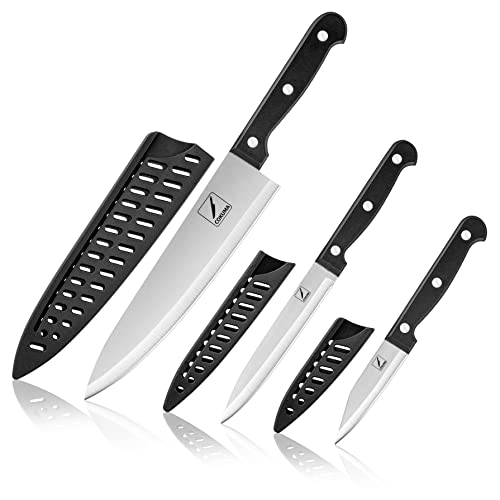
The COKUMA Kitchen Knife is a three-piece set with an eight-inch chef knife, a four-and-a-half-inch utility knife and a four-inch paring knife. Each knife comes with a matching sheath. It is the smallest set in this round-up and the lowest priced.
The set is easy to understand at a glance. Each knife has a clear job, so a beginner can learn what to reach for without guessing. That simplicity is part of its appeal.
Why a small set can make sense
A three-piece set suits someone who cooks a limited range of meals or who has little storage space. The chef knife handles most chopping, such as onions, carrots and herbs. The utility and paring knives cover smaller jobs, like slicing a tomato or trimming the skin from an apple.
Fewer pieces can also mean less clutter in a drawer. A buyer who makes simple weeknight dinners may never need a larger block of knives. A small set keeps the focus on the knives that get used most often.
Steel and hardness
The listing describes the blades as made from high-carbon German steel, in a grade called 3CR13MOV, with a hardness of 56 plus or minus 2 on the Rockwell scale. High-carbon steel can hold a sharp edge well, though it can rust if left wet. The listing says the blades are hand-polished.
Hardness affects how long an edge lasts between sharpenings, but it also affects how easily the edge can be restored. Buyers who want to keep the blades sharp should plan to use a honing rod or whetstone over time. Checking the product page for the most current specifications is always a good idea.
Handle and balance
The handles are made of ABS plastic, a common and light material. The listing describes the handle as shaped to balance the thin blade, which can make movement feel easier. Many beginners find a lighter knife less tiring for short prep sessions.
Balance is a personal matter. Some cooks prefer a heavier knife that does the work for them, while others want more control with a lighter tool. Holding a knife in a store before buying, when possible, helps show which feel suits you.
Cleaning and sheaths
The product recommends hand washing for best performance. The sheaths protect the edges and make drawer storage safer. The knives and sheaths are described as BPA free and lead free.
Hand washing takes a little extra time after cooking, but it helps protect a knife from the heat and soaking that dishwashers can cause. Drying each blade right away is a simple habit that reduces the risk of rust. Sheaths also keep sharp edges from knocking against other utensils.
Value for money
This is the lowest-priced set here, and it offers the fewest pieces. A buyer who needs only a few core knives may find it a sensible starting point. Someone who wants a full kit may prefer a larger set.
Price per piece is only one way to judge value. A small set that you use every day can be worth more than a large set that sits unused. Think about the tasks you do most often before comparing totals.
Pros
- Lowest price among the five sets in this round-up.
- Sheaths protect each edge in a drawer and make storage safer.
- Light handles can feel comfortable during short prep sessions.
- Compact set fits small kitchens and limited drawer space.
Cons
- Only three knives, so a buyer may need extra pieces later.
- Hand washing is recommended, which adds a step to cleanup.
- High-carbon steel can rust if left wet, so drying is important.
4. Astercook Knife Set: best for a wood-look kitchen with a smart block
The Astercook Knife Set is a six-piece set with warm wood-grain handles and a black block. It suits a buyer who wants the set to look good on the counter as well as cut well. The block design is one of its main selling points, so it is worth a closer look before you decide.
What the set includes
The set includes six knives, although the product data does not list each knife by name and size in the same detail as some other sets. It is built as a core kitchen collection with a matching block. Because the exact list is limited in the data, buyers should check the full description before buying.
Confirm the piece count and the knife types you need, such as a chef’s knife, a utility knife, or a paring knife.
The block design
The square block has four drainage holes, which the listing describes as a way to dry the knives quickly. The listing also says the design avoids the moisture and odor that can build up in some wooden blocks. A non-slip base keeps the block in place on the counter. Drainage matters most when knives are rinsed and placed straight into the block, since trapped water can cause spotting over time.
Blades and coating
The blades are made from high-carbon stainless steel with a non-stick coating described as OPD. The listing says food releases cleanly and rust stays away. The set is listed as dishwasher safe, although hand washing often helps knives last longer. Dishwashers can dull edges and wear handles faster, so a quick hand wash and dry is the safer routine.
Cutting feel
The listing mentions a blade ratio of 0.618, a design choice that aims for balanced cutting. It also describes an ergonomic handle that may reduce wrist fatigue. Real comfort depends on hand size and cutting habits, so results will vary. If possible, hold a similar knife in a store before buying, paying attention to weight and grip.
Value for money
At the highest price in this round-up, the Astercook set costs more than the others. Buyers pay for the block design and the wood-look styling. Someone focused only on blade count may find better value in a simpler set. Compare the price per knife and the knife types included against your actual cooking habits before deciding.
Pros
- Block has four drainage holes and a non-slip base.
- Wood-grain handles give a warm, modern look.
- Coating is described as non-stick and rust resistant.
- Balanced blade design is meant for smooth cutting.
Cons
- Highest price among these five sets.
- Exact piece list is less detailed in the product data.
- Dishwasher safe labeling does not replace careful hand washing.
5. Amazon Basics Color-Coded Dishwasher Safe Kitchen Knife Set: best for families sorting knives by color
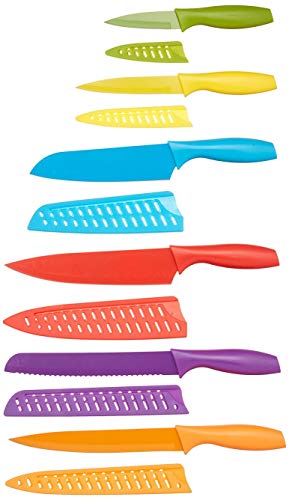
The Amazon Basics Color-Coded Knife Set is a twelve-piece set with six knives and six matching blade guards. Each knife has a color, which the listing says helps tell tools apart quickly. This set suits a household that wants a clear system for prep work.
Many home cooks use one knife for everything and switch only when a task feels awkward. A color system gives the whole household a simple rule to follow, so anyone can grab the right tool without guessing.
What the set includes
The six knives are a paring knife, a utility knife, a santoku knife, a carving knife, a chef knife and a bread knife. Each comes with a blade guard that protects the edge and allows safer drawer storage. The set is the only one here that uses color as its main feature.
A paring knife handles small jobs such as peeling and trimming, while a chef knife covers most general chopping. Having both types in one box means you can cover common kitchen tasks without buying separate pieces later.
Why color matters
The listing says the color system helps quick identification and may reduce cross-contamination during food prep. Using one color for raw meat, another for vegetables, and so on is a common kitchen habit. A set that already has color built in can make that habit easier to follow.
Color coding works best when everyone in the home agrees on what each color means. Writing a short chart and keeping it near the cutting board can help children and guests follow the same system.
Blades and coating
The blades are stainless steel and are described as able to hold a sharp edge. The nonstick color coating is said to help food release for easier cutting. Coatings like this can wear over time, so results may change with use.
Stainless steel resists rust better than plain carbon steel, which is one reason it appears in so many everyday knives. Edge retention still depends on how often the knives are used and how they are cleaned and stored.
Handles and storage
The handles are described as ergonomic, designed for a secure and comfortable grip. The matching guards make it simple to store the set in a drawer without dulling the blades. Because the guards are sold as a set, they stay with their knives.
Loose knives in a drawer can knock against each other and chip an edge. Guards prevent that contact, so each blade stays protected even in a crowded drawer.
Cleaning
The set is labeled dishwasher safe. Many knife owners still hand wash to protect edges and coatings, so the choice depends on personal routine. Drying each knife after washing helps prevent spots on the steel.
Dishwasher cycles use high heat and strong detergent, which can dull edges and wear coatings over time. Rinsing by hand and drying right away is a gentler option for knives you want to keep for many years.
Value for money
The Amazon Basics set sits in the middle of the price range and offers the most knives by count. Buyers get six working blades plus guards for a modest price. Someone who wants a sharpener or wood block will need to look elsewhere.
Comparing sets is easier when you look at what each one includes. Counting knives, guards and accessories side by side shows where your money goes and what you still need to buy.
Pros
- Six knives plus six guards cover a wide range of tasks.
- Color coding helps sort tools during food prep.
- Guards protect edges and make drawer storage safer.
- Good value by piece count for the price.
Cons
- No block is included, so counter storage requires another solution.
- Nonstick coating may wear with frequent dishwasher use.
- Color system may not suit buyers who prefer a uniform look.
Comparison insights: how the five sets differ
The five sets differ most in piece count, storage and styling. Brewin and NULAS offer the most complete kits, while COKUMA is the smallest. Astercook focuses on the block, and Amazon Basics focuses on color and guards.
Piece count is the easiest difference to see at a glance. A larger set usually includes more specialized blades, such as a bread knife or a paring knife, which can be useful for specific tasks. A smaller set keeps the focus on the basics, which some cooks prefer when they rarely prepare complex meals.
On performance, the listings show similar blade types, mostly stainless steel with coatings. Hardness and edge angles are described for several sets, but real cutting results depend on how each knife is used and maintained. A buyer should not expect a large gap in cutting ability based on the data alone.
Ease of use varies more. Brewin and Amazon Basics mention strong grips and useful extras. COKUMA’s light handle may suit short prep, while Astercook’s block design adds convenience on the counter.
Value for money depends on needs. The lowest price does not always mean the best fit, and the highest price does not guarantee more blades. Matching the set to daily habits matters more than chasing a single number. Count the knives you will actually use each week, then compare that list against each set.
Buying guide: key factors explained in plain words
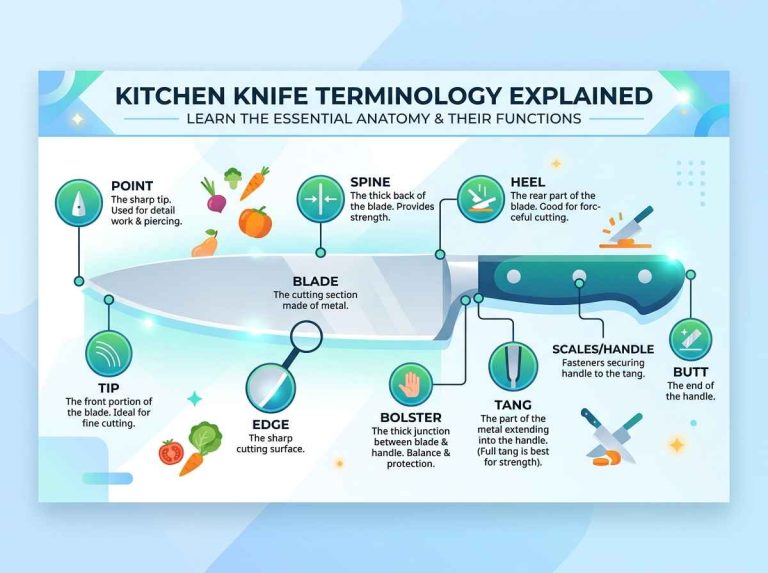
Start with the number and type of knives. A chef knife handles most jobs, while a bread knife, paring knife and utility knife cover smaller tasks. Check that the set includes the knives you use most.
Next, look at the steel. Stainless steel resists rust, and high-carbon steel can hold an edge well but may need more drying. Hardness is a rating of how firm the steel is, and a higher number usually means the edge lasts longer, though it can also be harder to sharpen at home.
Handles matter for comfort and control. Textured or shaped handles help the hand stay in place, especially when wet. Try to see the grip in your own hand before buying, or hold a similar knife in a store if you can.
Storage and cleaning come last but affect daily life. A block keeps knives visible and organized, while sheaths or guards protect edges in a drawer. Dishwasher safe labels are convenient, but hand washing often helps knives last longer.
Who should buy these products
A first-time cook who wants a complete kit should consider the Brewin set. Its eight pieces and sharpener cover most starter needs.
Someone shopping for a gift or a new apartment may prefer the NULAS set. Its black finish and gift-ready box suit presents.
A buyer with limited space or a light cooking routine may find the COKUMA set a good match. Three knives keep the drawer uncluttered.
A person who values counter looks and drainage may like the Astercook set. Its wood-grain handles and smart block suit an open kitchen.
A household that wants color-coded prep may choose the Amazon Basics set. Its six knives and guards suit shared kitchens, where each person can keep a clear sense of which blade is for which food.
Final verdict
No single set fits every kitchen. The Brewin set offers the most complete starter kit, and the Amazon Basics set offers the most knives for the price. The COKUMA set is the simplest choice for small needs.
Buyers who want a stylish block should look at Astercook, though it costs more. NULAS suits buyers who want a black, gift-ready set. In short, match the set to how you cook, where you store your knives and how much you plan to spend. A set that fits your routine will get used far more than one with pieces you never touch.
Frequently Asked Questions
Is a cheap knife set good enough for beginners?
Yes, many budget sets handle everyday tasks like chopping vegetables and slicing bread. Results depend on the steel, the edge and how well the knives are cared for. Beginners often do well starting with a basic set and upgrading later, once they know which knives they reach for most.
Should I put budget knives in the dishwasher?
Many sets are labeled dishwasher safe, but hand washing is often gentler on blades and handles. Dishwashers can dull edges and wear coatings over time, and knives can knock against other dishes in the wash. Drying knives right after washing also helps prevent rust spots.
What is the difference between stainless steel and high-carbon steel?
Stainless steel contains enough chromium to resist rust well. High-carbon steel can hold a sharper edge but may rust if left wet. Many budget knives use a blend or a coating to balance both traits, so check the product description for the steel type before you buy.
Do I need a knife sharpener with my set?
A sharpener helps keep edges working well over time. Some sets include one, while others do not. Even without one, a separate sharpener or honing tool can extend the life of your knives, and a honing rod can realign an edge between sharpenings.
How many knives do I really need?
Most home cooks start with a chef knife, a bread knife and a paring knife. A utility knife and a santoku add flexibility for other tasks, such as slicing meat or cutting fish. Choose the number that matches your cooking habits rather than the largest set, because extra pieces often sit unused in a drawer.

Mary is a home cooking enthusiast and kitchen gear reviewer with a passion for practical cookware and food preparation tools. She enjoys testing cutting boards, knives, kitchen gadgets, and other cooking essentials to help home chefs make smarter buying decisions. Through KitchenCutting.com, Mary shares honest product reviews, buying guides, and helpful kitchen tips to make cooking easier, safer, and more enjoyable.